

Brighten Your Home: Essential Tips for Choosing Indoor Staircase Lights
Thinking about your indoor staircase lights? It’s easy to overlook them, but honestly, they’re pretty important. Stairs are used all the time, and making sure they’re lit well isn’t just about looks; it’s a big safety thing. Plus, the right lighting can totally change how your home feels. We'll go over some simple ideas to help you pick the best indoor staircase lights for your place, making it safer and a bit more stylish. Let's get your stairs looking good and feeling safe.
Key Takeaways
- Safety first: Good indoor staircase lights stop trips and falls, especially when it’s dark. Think about motion sensors for extra peace of mind.
- Style matters: Lighting can make your staircase look much better, highlighting features and setting a nice mood for your home.
- LEDs are a smart choice: They use less energy, last longer, and come in lots of styles, from wall lights to little step lights.
- Placement and colour are key: Think about where the lights go and what colour the light is. Warmer light is usually better for homes, and brighter light is needed for older people.
- Smart controls add convenience: Dimmers and smart systems let you adjust the light easily and save energy, making your indoor staircase lights work better for you.
Prioritising Safety With Indoor Staircase Lights
Guiding Light For All Hours
Let's be honest, nobody wants to be fumbling around in the dark trying to find the next step, especially when you're half asleep or carrying something. Good lighting on your stairs is pretty much non-negotiable for safety. It's about making sure everyone, from the youngest to the oldest in the house, can get up and down without any nasty surprises. Think of it as a constant, reliable guide, day or night. You don't want to be relying on that one dim hallway light that barely reaches the top step, do you? Proper illumination means fewer trips, fewer stumbles, and a much more relaxed feeling when you're moving between floors.
Motion Sensors For Enhanced Security
Now, for a bit of a clever upgrade: motion sensors. These are brilliant for staircases. Imagine walking towards the stairs, and poof, the lights gently come on, guiding your way. Once you're past, they can switch off again. It's not just about convenience, though. It adds a nice layer of security, too. If someone's moving around the house unexpectedly, the lights kicking in can be a deterrent, or at least let you know something's happening. Plus, you're not leaving lights blazing all night when nobody's even using the stairs, which is a win for your electricity bill.
Illuminating Steps Without Glare
When we talk about lighting stairs, it's not just about having lights on; it's about how they light up. You don't want a blinding spotlight right in your eyes as you ascend or descend. The goal is to light up each individual step clearly, so you can see exactly where to place your foot. This often means using lights that are positioned lower down, perhaps integrated into the risers or the side of the steps themselves. Using something like LED strip lights tucked away can cast a soft, even glow that highlights the edges of the steps without causing any harsh glare. It makes the whole experience much more comfortable and, you guessed it, safer.
Enhancing Home Aesthetics With Stairway Lighting
Elevating Architectural Features
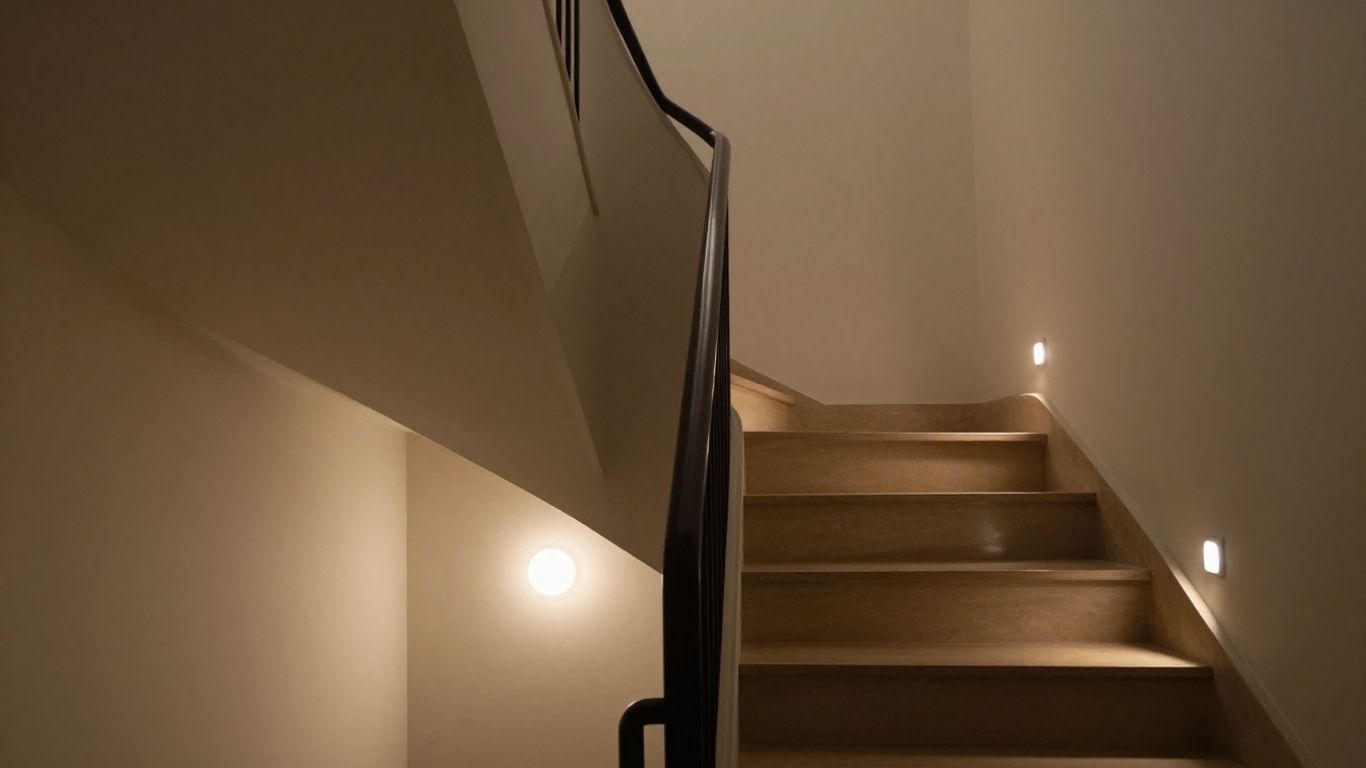
Your staircase isn't just a way to get from A to B; it's a structural element that can really add character to your home. Think of lighting as the jewellery for your stairs. You can use it to draw attention to interesting details, like a sweeping curve or a textured wall. For instance, placing small, recessed lights along the wall at a specific height can cast subtle shadows, making those textures pop. Or, consider LED strips tucked just under the lip of each step. This doesn't just look modern and sleek; it highlights the shape of the stairs themselves, giving them a bit of a floating appearance. It’s all about using light to make the staircase a feature, not just a functional part of the house.
Creating Ambiance And Mood
Lighting has a massive impact on how a space feels, and your staircase is no different. Do you want it to feel warm and inviting, or more dramatic and sophisticated? For a cosy vibe, warm white bulbs (around 2700K to 3000K) are your best bet. They create a soft glow that makes the area feel more welcoming, especially for those late-night trips to the kitchen. If you're going for something a bit more modern or need clearer visibility, a neutral white (3500K to 4100K) might be better. It’s a good middle ground. You can even use different types of lights together. Imagine soft wall sconces providing a general glow, with subtle step lights for clear visibility. This layering means you can adjust the mood depending on the occasion.
Complementing Interior Design Styles
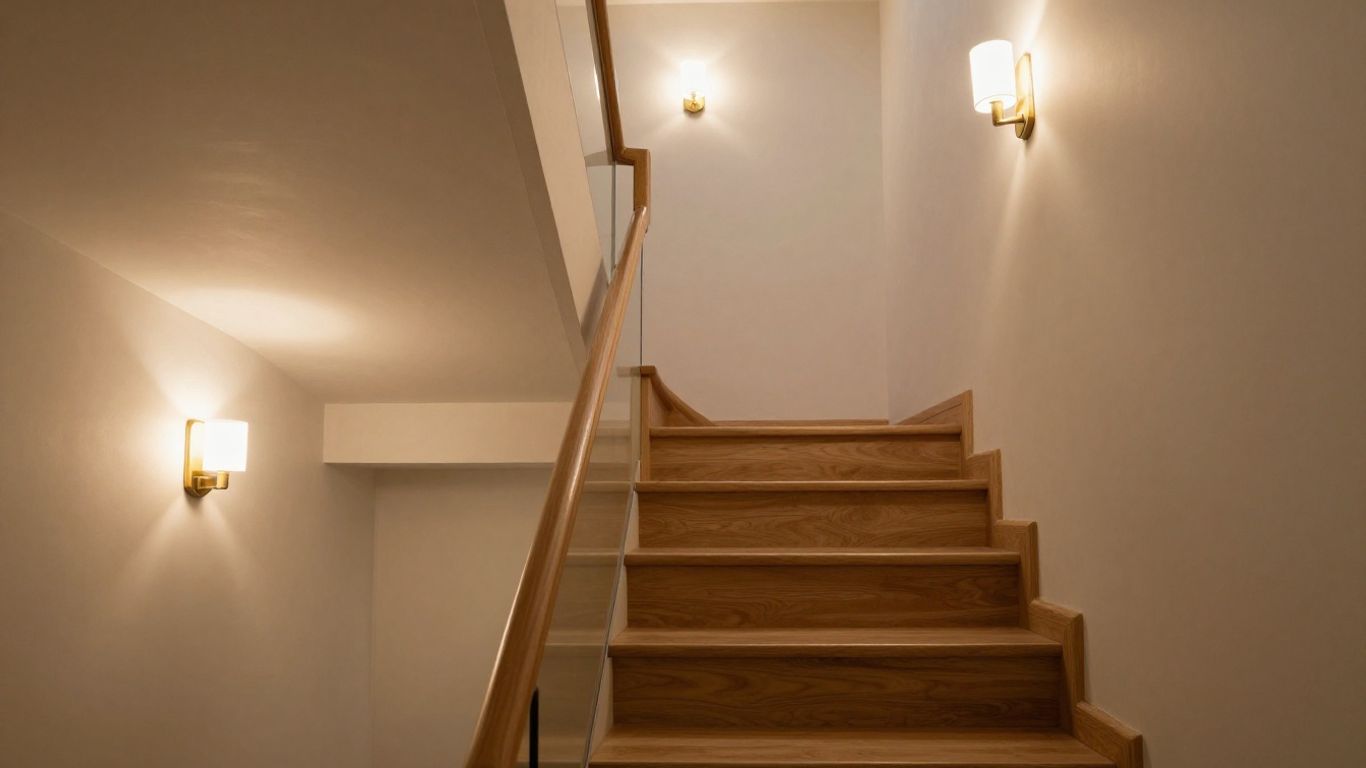
Whatever your home's style, there's a lighting solution to match. For a traditional home, you might look at classic wall sconces with a bit of decorative flair, perhaps in an antique brass finish. These can add a touch of elegance without being over the top. If your home is more contemporary, clean lines are key. Think minimalist recessed lights built right into the wall or ceiling, or slim LED strips that blend in. Even the finish of the fixture matters – brushed nickel or matte black can really tie in with modern decor. It’s about making the lighting feel like a natural extension of your overall design, rather than an afterthought. The goal is for the staircase to look good and feel right, no matter the style of the rest of your house.
Choosing the right lighting for your staircase is a chance to add personality and style. It's about more than just seeing where you're going; it's about making a statement and creating a welcoming atmosphere that flows through your entire home. Don't underestimate the power of well-placed lights to transform a simple stairway into a beautiful architectural element.
Choosing The Right Type Of Indoor Staircase Lights
When it comes to lighting up your stairs, it's not just about sticking a bulb in a fixture and hoping for the best. You've got options, and picking the right ones can make a big difference to how safe and how nice your staircase looks. It's a bit like choosing the right tools for a job – you wouldn't use a hammer to screw in a lightbulb, would you?
The Benefits Of LED Staircase Lights
Let's start with LEDs. Honestly, they're pretty much the go-to these days, and for good reason. They use way less electricity than old-fashioned bulbs, which is good for your wallet and the planet. Plus, they last for ages. We're talking years, not months, so you won't be up there changing bulbs every other week. They also come in all sorts of colours and brightness levels, so you can get exactly the look you're after. Whether you want a crisp, modern feel or something a bit warmer and cosier, LEDs can do it.
Exploring Wall Sconces And Recessed Options
So, where do you put the lights? Two popular choices are wall sconces and recessed lights. Wall sconces are those fixtures that stick out from the wall. They can add a bit of style and character, almost like a piece of art. You can position them at different heights to create different effects. Recessed lights, on the other hand, are fitted into the ceiling or wall so they're flush with the surface. They give a really clean, modern look and don't take up any space, which is great for narrower staircases. They provide a more general light, kind of like a soft glow.
Considering Step Lights For Precision Illumination
Then you've got step lights. These are usually small lights fitted directly into each individual step or the riser. They're brilliant for making sure every single step is clearly lit, which is a massive safety boost, especially if you're fumbling around in the dark. They give a really focused light right where you need it, so you can see exactly where to put your foot. You can get them in different styles too, some pointing downwards, others more subtle. They really do make a staircase feel more inviting and much safer.
Picking the right type of light isn't just about brightness; it's about directing that light effectively. You want to illuminate the path without creating harsh shadows or blinding glare. Think about how the light will fall and what it will highlight.
Key Considerations For Staircase Lighting Design
Understanding Light Placement and Height
When you're thinking about where to put your lights, it's not just about making things look pretty. Placement is super important for safety. You don't want lights that are too low and you keep bumping your head, especially on a grander staircase with a bit more headroom. On the flip side, lights that are too high might not cast enough light down onto the steps themselves. A good rule of thumb for wall-mounted lights, like sconces or recessed fittings, is to position them somewhere between 15 and 20 centimetres above the nosing of each step. This usually gives you a nice, even spread of light without being too harsh or creating awkward shadows. If you're considering overhead lighting, like a pendant or a chandelier, make sure it's high enough not to be a hazard – generally, at least 2 metres from the floor is a safe bet. It’s all about creating a clear path, so you can see exactly where you're putting your feet.
Selecting Appropriate Colour Temperature
The colour of the light matters more than you might think. It can really change the feel of your staircase and even how you perceive the materials. You'll usually see colour temperature measured in Kelvin (K). Lower Kelvin numbers, like 2700K to 3000K, give off a warm, yellowish light, similar to old incandescent bulbs. This is great for creating a cosy, inviting atmosphere, especially in more traditional homes. Higher Kelvin numbers, say 4000K or above, produce a cooler, bluer light, which can make a space feel more modern and alert. For staircases, a warm to neutral white (around 3000K to 3500K) is often a good balance. It's bright enough to see clearly but still feels comfortable and welcoming, not stark or clinical. Think about the overall style of your home when you pick this – you want the lighting to fit in, not stick out like a sore thumb.
The Importance of Brightness Levels
Brightness, often measured in lumens, is another big factor. You need enough light to make the stairs safe, but you don't want it so bright that it's blinding or makes it hard to see when you move from a darker area. The International Residential Code (IRC) suggests a minimum of 1 foot-candle (about 11 lux) measured at the centre of the treads. This is a good baseline for safety. However, you might want more light depending on the staircase's design and how it's used. For instance, a very wide or grand staircase might need more lumens than a narrow, straight one. It's also worth thinking about how the light will interact with the stair materials. Darker wood or carpet might absorb more light, so you'd need a slightly brighter output compared to lighter surfaces.
Getting the brightness right means you can comfortably see each step without feeling like you're in a spotlight. It's about making the journey up or down feel secure and easy on the eyes, no matter the time of day or night.
Here's a quick look at typical brightness levels:
| Area | Recommended Brightness (Lux) |
|---|---|
| Stair Treads & Landings | 10-20 Lux |
| Stair Wall Accent | 5-10 Lux |
| General Stairway Illumination | 10-15 Lux |
Smart Solutions For Stairway Illumination
Layering Light For Versatility
Think of your staircase lighting like a good outfit – it needs layers to look its best and work for different occasions. We're not just talking about one bright light at the top and one at the bottom anymore. Layering means using a mix of light types to create different moods and ensure every step is seen clearly. You might have subtle step lights for a gentle glow at night, some stylish wall sconces for general illumination during the day, and perhaps even a feature light to highlight a piece of art on the landing. This approach means your stairs aren't just safe; they become a dynamic part of your home's design.
Integrating Dimmers And Smart Controls
This is where things get really clever. Dimmers are fantastic for adjusting the mood. Want a soft, welcoming light for a late-night trip to the kitchen? Dim it down. Need bright light to find something you dropped? Crank it up. But smart controls take it a step further. You can set schedules, so the lights come on automatically as it gets dark, or even link them to motion sensors. Imagine your stairs lighting up just as you approach, then fading away once you've passed – no fumbling for switches, and no wasted energy. It’s all about making your home work for you.
Energy Efficiency Through Modern Technology
Nobody likes a huge electricity bill, and thankfully, modern lighting tech is on our side. Using LED bulbs is a no-brainer; they use way less power than old-fashioned bulbs and last for ages. But you can go even further. Smart systems, as we've touched on, only use light when and where it's needed. Motion sensors mean lights aren't on all night if no one's using the stairs. Timers can ensure lights are off during daylight hours. It’s about being smart with your energy use, which is good for your wallet and the planet.
Modern lighting solutions for staircases are all about making life easier and more efficient. It's not just about having light; it's about having the right light, at the right time, using the least amount of energy possible. This means combining different types of fixtures with smart controls that adapt to your needs and the environment.
Practical Aspects Of Staircase Lighting
Durability and Ease of Maintenance
When you're picking out lights for your stairs, it's not just about how they look or how much light they give off. You've also got to think about how long they'll last and how much hassle they'll be to keep working. Nobody wants to be constantly changing bulbs or cleaning dusty fixtures, especially in a spot that's used all the time. Look for lights made from sturdy materials that can handle a bit of wear and tear. Things like metal or tough plastic are usually a good bet. For bulbs, LEDs are a no-brainer here. They last for ages – we're talking years, not months – and they don't get as hot as older types of bulbs, which is a nice bonus for safety. This means less time spent up a ladder fiddling with replacements and more time just enjoying the light.
Retrofitting Existing Spaces
Got an older house with a staircase that feels a bit dim or just plain boring? Don't worry, you don't need to rip everything out to make it look better. Retrofitting is all about adding new lighting to what's already there. For example, if you have plain walls next to your stairs, you could easily add some wall sconces. They don't need a lot of complex wiring, and they can make a big difference to the look and feel. Even adding small LED strip lights under the edge of each step is often easier than you might think. Many modern kits are designed for DIY installation, or at least make it much simpler for an electrician. The key is to find solutions that work with your existing structure without causing major disruption.
Professional Installation For Optimal Results
While some lighting jobs are simple enough for a keen DIYer, staircase lighting can sometimes be a bit trickier. It's not just about screwing in a bulb; it's about placement, wiring, and making sure everything is safe and up to code. If you're thinking about recessed lights, smart controls, or anything that involves mains electricity, it's usually best to call in a professional. They know exactly where to put the lights for the best effect and safety, how to wire them up properly, and they can make sure it all meets the latest regulations. Plus, having it done by a pro means you're less likely to have problems down the line, and you can just relax and enjoy your newly lit stairs.
Choosing the right lighting for your stairs is a balance. You want it to be safe, look good, and not be a pain to maintain. Thinking about these practical points from the start will save you time, money, and headaches later on.
Making sure your stairs are lit up properly is super important for safety and looks. Good lighting can stop trips and falls, making your home feel safer for everyone. It also makes your staircase a nice feature, not just a way to get around. Want to see some great lighting options that will make your stairs shine? Check out our website for ideas and products that fit any style.
Wrapping Up Your Stairway Lighting Project
So, there you have it. Lighting up your stairs isn't just about stopping yourself from tripping in the dark, though that's a pretty big deal, especially if you've got kids or older folks around. It's also about making your home look a bit more special. Think about how the right lights can make that hallway feel more welcoming or how a well-placed light can highlight a nice picture on the wall. Whether you go for sleek LEDs under the steps or some nice wall lights, taking a bit of time to get it right really makes a difference. Don't forget to think about things like energy use too – nobody wants a huge electricity bill just for lighting the stairs. It’s all about finding that sweet spot between looking good, being safe, and not costing the earth. Happy lighting!
Frequently Asked Questions
Why is lighting my stairs so important?
Lighting your stairs is super important for safety! It helps everyone see where they're walking, especially at night, so no one trips or falls. Plus, nice lighting can make your hallway look much more stylish and welcoming.
What kind of lights are best for stairs?
LED lights are a brilliant choice. They don't use much electricity, last a really long time, and you can get them in different brightness levels and colours to create the perfect mood. Lights built right into the steps or small lights on the wall are popular too.
Should I use bright lights on my stairs?
You don't need super bright lights everywhere. Often, softer, lower lights are better, especially at night. You can use motion sensors so the lights only come on when someone is there, which is handy and saves energy. It's about having enough light to see clearly without being blinding.
Where should I put lights on my staircase?
You can put them in a few places! Lights can go on the walls at about waist height, or even built into the edge of each step. Some people also use lights above the stairs, but you need to make sure they're high enough so no one bumps their head.
Can I make my stair lights smarter?
Absolutely! You can get lights that connect to your phone or smart home system. This means you can control them with an app, set timers, or even have them turn on automatically. Dimmers are also a great idea, letting you change how bright the lights are whenever you want.
Is it hard to install new lights on my stairs?
It can be a bit tricky, especially if you're not used to electrical work. For the best and safest results, it's often a good idea to get a qualified electrician to help you install them, especially if you're adding new wiring or special features like smart controls.

