

Brighten Your Workspace: The Ultimate Guide to Home Office LED Light Solutions in 2025
So, you're looking to sort out your home office lighting? It's easy to just stick with whatever bulb is in the ceiling, but honestly, the right home office LED light can make a massive difference. It's not just about seeing your keyboard; it's about how you feel, how productive you are, and even how you look on those endless video calls. Let's get your workspace shining.
Key Takeaways
- Layering your home office LED light with ambient, task, and accent lighting creates a more comfortable and functional space.
- Task-specific lighting, like adjustable desk lamps, is vital for reducing eye strain and improving focus on detailed work.
- Smart home office LED light solutions offer convenience through voice/app control and energy savings via automation.
- Even illumination is key for video calls; position lights to avoid harsh shadows and glare on your face.
- Innovative home office LED light technologies can simulate natural light and support plant growth, boosting mood and air quality.
Optimising Your Home Office LED Light Setup
The Importance Of Effective Home Office Lighting
Getting your home office lighting right is more than just about seeing your keyboard. It genuinely affects how you feel and how much you get done. Think about it: a gloomy room can make you feel sluggish, while harsh, glaring lights can give you a headache before lunchtime. The goal is to create a space that feels comfortable, energises you when you need it, and helps you focus without straining your eyes. Good lighting can make a big difference, turning a drab corner into a productive hub.
Layering Light For Productivity And Comfort
Instead of relying on one big overhead light, think about layering different types of light. This approach, often called 'zone lighting', means you can adjust the brightness and type of light depending on what you're doing. For instance, you might have a bright, focused light for your desk, a softer ambient light for the general room, and maybe a little accent light for a bookshelf or a piece of art. This way, you're not just lighting the room; you're creating different moods and functional areas.
Here's a simple way to think about layering:
- Ambient Lighting: This is the general, overall light in the room. An LED ceiling fixture or a floor lamp in the corner can provide this. It should be soft and not too bright.
- Task Lighting: This is your focused light, usually for your desk. A good desk lamp is key here. It needs to be bright enough for detailed work but adjustable so you can position it where you need it.
- Accent Lighting: This is for highlighting specific features, like artwork, plants, or shelves. Small LED strips or spotlights work well for this.
Choosing The Right Home Office LED Light Fixtures
When you're picking out LED light bulbs and fixtures, there are a few things to consider. First, the colour temperature. This is measured in Kelvin (K). For general office work, something between 3000K and 4000K is usually best – it's a neutral to cool white that helps with concentration. You'll also want to think about brightness, measured in lumens. For a desk area, you might want around 500-700 lumens, but this can vary. Dimmable options are fantastic because they give you control. And don't forget about the fixture itself – does it fit the style of your room? A sleek desk lamp or a modern pendant light can add to the overall feel of your workspace. Look for LED bulbs that offer good luminous efficacy, meaning they give out a lot of light for the energy they use, often between 70 to 100 lumens per watt.
Enhancing Focus With Task-Specific Lighting
When you're trying to get work done, the right light can make all the difference. It's not just about having a light on; it's about having the right light in the right place. Think of it like this: you wouldn't try to do intricate surgery with a dim bedside lamp, would you? Your home office needs that same level of precision.
Desk Lamps For Precision Work
Your desk is where the magic (or the slog) happens, so it needs its own dedicated light source. A good desk lamp isn't just for aesthetics; it's a tool. Look for lamps with adjustable arms and heads. This lets you direct the light exactly where you need it, whether that's on a document, your keyboard, or a particularly fiddly bit of craftwork. This focused illumination is key to reducing eye strain and keeping your concentration sharp. Without it, you're more likely to be squinting, getting headaches, and generally feeling drained.
Adjustable Brightness And Colour Temperature
Not all tasks are created equal, and neither is your energy level throughout the day. That's where adjustable brightness and colour temperature come in. Being able to dim the light when you need a softer glow, or crank it up for detailed work, is a game-changer. Similarly, the colour of the light matters. Cooler, bluer light (around 5000K-6500K) can make you feel more alert, like a bright, crisp morning. Warmer, yellower light (around 2700K-3000K) is more relaxing, good for winding down or for tasks that don't require intense focus. Many modern LED bulbs and fixtures offer this flexibility, often controlled via an app or a simple dial.
Here's a quick guide to colour temperature:
- Cool White (5000K-6500K): Best for focus, alertness, and detailed tasks. Mimics daylight.
- Neutral White (3500K-4100K): A good all-rounder, suitable for general office tasks.
- Warm White (2700K-3000K): Relaxing and cosy, ideal for evening work or creating a calm atmosphere.
Minimising Screen Glare With Strategic Placement
Glare on your computer screen is a productivity killer and a major cause of eye fatigue. It's that annoying reflection that makes it hard to see what you're doing. The trick is to position your task lighting so it doesn't shine directly onto your screen. Ideally, the light source should be to the side of your monitor, not directly in front or behind it. If you have an adjustable lamp, angle it so the light falls on your desk surface or documents, not your screen. Sometimes, simply moving your desk or monitor slightly can make a big difference in how the light hits it. It’s all about finding that sweet spot where your work is well-lit, but your screen remains clear and comfortable to look at.
Proper task lighting isn't just about brightness; it's about control. Being able to direct the light, adjust its intensity, and even change its colour temperature allows you to tailor your workspace to your specific needs throughout the day, significantly impacting your comfort and output.
Creating Ambiance With Decorative Lighting
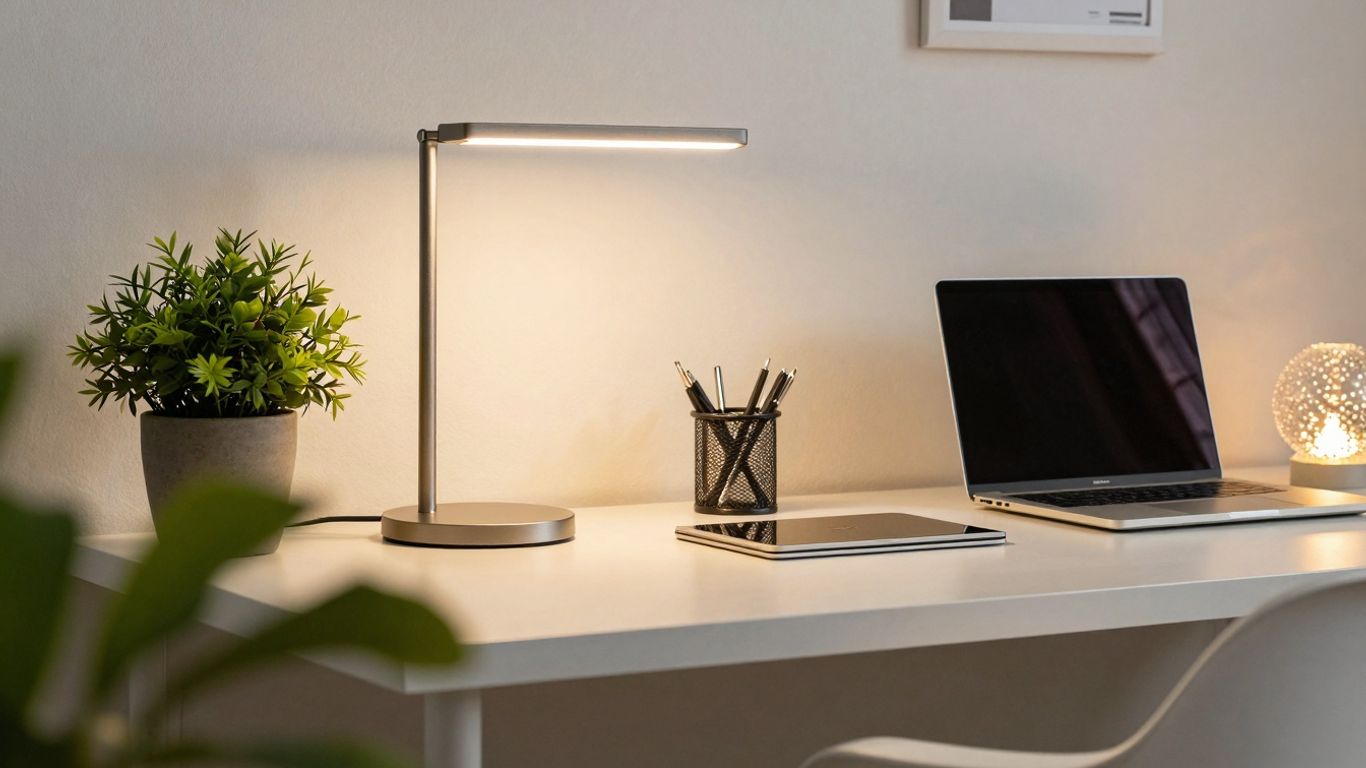
Beyond just making sure you can see your keyboard, lighting in your home office can really set the mood. It’s about making the space feel less like a sterile box and more like a place you actually want to spend time in. Think of it as the finishing touch that ties everything together, making your workspace both functional and a bit of a personal sanctuary.
Modern Pendant and Ceiling Lights
Swapping out a basic, boring ceiling fixture for something a bit more stylish can make a surprising difference. Modern pendant lights, for instance, aren't just about throwing light downwards; they can be a real design statement. You can find them in all sorts of shapes and materials – think sleek metal, frosted glass, or even wood accents. They cast a nice, even light and can really anchor the look of your office, especially if you've got a minimalist setup. Decorative ceiling lights are also a great option. Whether it's a flush mount for a smaller room or a more elaborate drum shade, they can echo your room's colour scheme and add a bit of personality without being too in-your-face.
Subtle Accent Lighting for Shelves and Art
This is where you can really start to inject some personal flair. Accent lighting isn't about illuminating a whole area; it's about drawing attention to specific things. Small LED strips tucked under shelves can make your books or decorative items glow, or you could use directional spotlights to highlight a piece of art on the wall. It adds depth and interest to the room, making it feel more considered and less like just a place to get work done. It’s a subtle way to make your office feel more like your space.
Warm Tones for Evening Relaxation
As the day winds down, you might not want that bright, cool office light anymore. This is where adjustable LED bulbs really shine. You can switch to warmer, softer tones that feel more relaxing. Imagine finishing up some emails under a gentle, amber glow instead of a harsh white light. It helps signal to your brain that it's time to wind down, making the transition from work to evening a bit smoother. Having a floor lamp in a corner that provides soft, indirect light is also a great way to create a cosy atmosphere when you're not actively working.
Smart Home Office LED Light Solutions
Voice and App Controlled Illumination
Forget fumbling for switches in the dark or getting up to dim the lights when you're deep in thought. Smart LED bulbs and fixtures have totally changed the game. You can control them using your voice through smart assistants like Alexa or Google Assistant, or with simple apps on your phone or tablet. This means you can adjust brightness, change colour temperatures, or even turn lights on and off without moving an inch. It’s brilliant for those moments when you’re on a long call and need to subtly adjust the lighting, or when you just want to dim things down for a break without interrupting your workflow. The convenience of being able to tailor your lighting on the fly is a real game-changer for productivity and comfort.
Automating Lights with Sensors and Timers
This is where smart lighting really starts to pay for itself. You can set up timers so your lights come on and go off at specific times, mimicking a natural daily rhythm or ensuring your office is lit when you need it. Even better are motion sensors. If you have a habit of leaving lights on when you pop out for a cuppa, a motion sensor can detect when the room is empty and automatically switch the lights off. This not only saves you the hassle but also significantly cuts down on wasted electricity. It’s a simple way to make your home office more efficient without even thinking about it.
Energy Efficiency and Cost Savings
One of the biggest draws of smart LED lighting is its energy efficiency. LEDs use a fraction of the power compared to older incandescent or even halogen bulbs. When you combine this with the automation features – like dimming and automatic shut-offs – the savings on your electricity bill can be quite noticeable over time. Plus, LED bulbs last much longer, meaning you'll be buying replacements far less often. It’s a win-win: you get a better lit, more comfortable workspace, and you save money while also doing your bit for the environment. It’s a smart investment that keeps on giving.
Smart lighting systems offer a fantastic blend of convenience and efficiency. By integrating voice control, app management, and automated schedules, you can create a lighting environment that perfectly suits your needs throughout the day, all while minimising energy consumption and reducing your utility costs. It’s about making your workspace work smarter, not harder.
Lighting For Virtual Collaboration
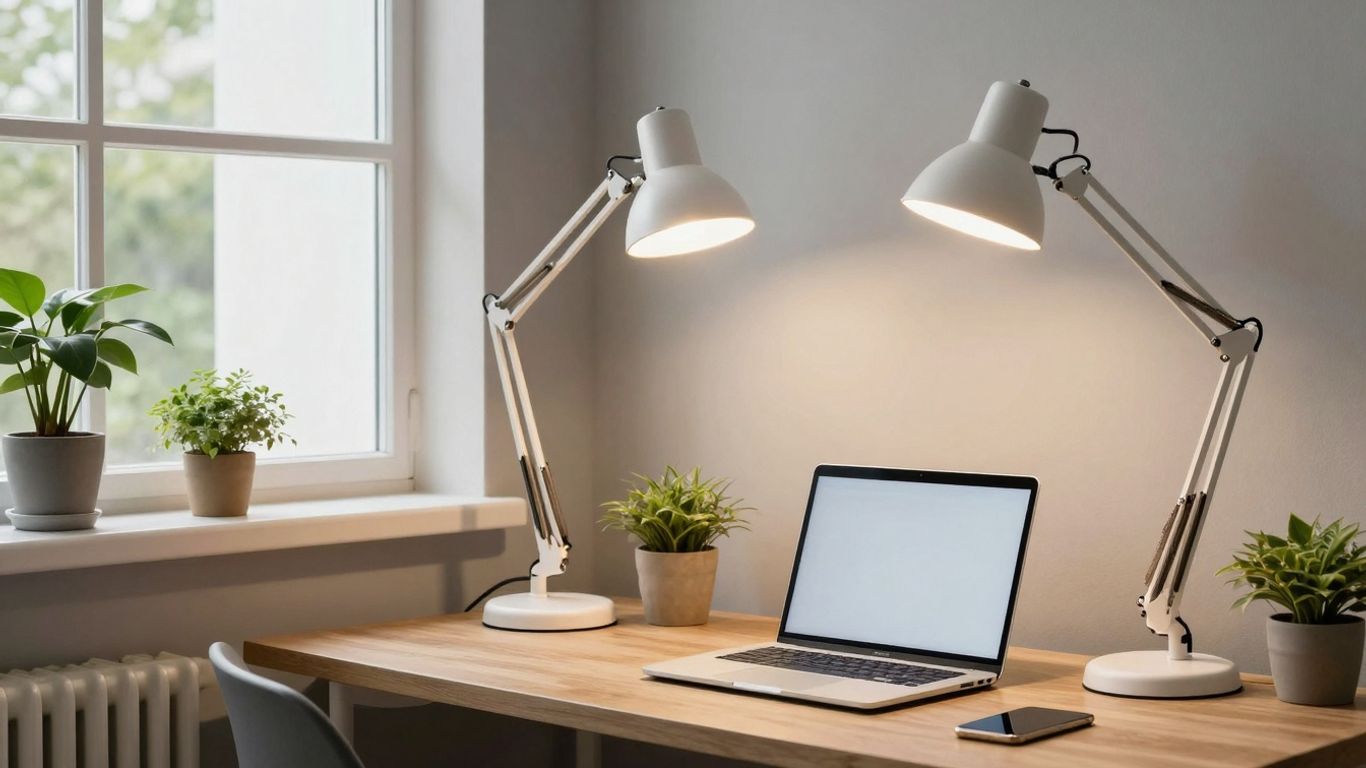
Right then, let's talk about looking your best when you're on those endless video calls. It's not just about what you say anymore, is it? How you appear on screen matters, and good lighting is the secret weapon. We've all seen those people who look like they're in a dark cave or have a spotlight directly up their nose – not exactly professional, is it?
Even Facial Illumination For Video Calls
The goal here is to make sure your face is lit up evenly. Think of it like a gentle, all-around glow rather than a harsh, direct beam. This stops those awkward shadows from appearing under your eyes or nose. A good starting point is to have a light source directly in front of you. Ring lights are popular for a reason; they give a nice, consistent light. If a ring light isn't your style, a soft panel LED or even a well-placed desk lamp with a diffuser can do the trick. Aim for a brightness that's noticeable but not blinding – something around 600 to 800 lumens is usually a good spot.
Avoiding Harsh Shadows And Glare
This is where placement really counts. Avoid having a bright window or a strong light source directly behind you, as this will make you look like a silhouette. Overhead lights can also be a bit brutal, creating deep shadows. Instead, try to position your main light source at a slight angle in front of you, maybe a bit above eye level. If you're using a desk lamp, make sure it's not directly reflecting off your screen, causing that annoying glare that makes reading text a pain. Sometimes, a second, softer light source placed opposite your main one can help fill in any remaining shadows.
Enhancing Your Background Presence
It's not just about you; your background plays a part too. A completely dark or uninteresting background can make you seem distant. Adding a subtle light source behind your setup, perhaps illuminating a shelf or a piece of art, can add depth and make your overall image more engaging. This doesn't need to be bright; a soft accent light is all it takes to give your background some life and make your presence feel more complete during virtual meetings. It shows you've put a bit of thought into your presentation, which always looks good.
Innovative Home Office LED Light Technologies
Simulating Natural Light Environments
Ever feel like your home office is a bit of a cave, especially if it lacks windows? You're not alone. Thankfully, there are some clever LED solutions that can make a big difference. Think about LED panels that can mimic natural scenes, giving you the feeling of looking out onto a sunny day, even when you're stuck indoors. This isn't just about making the place look nicer; it can actually lift your mood and make you feel less boxed in. Some studies suggest this kind of lighting can help reduce that cooped-up feeling by a noticeable amount.
Light therapy devices, often used for SAD, can also simulate sunlight at high intensities. While not a direct replacement for natural light, they can offer a boost, especially during darker months.
RGB LED Strips for Personalised Ambiance
If you like to switch up the vibe in your workspace, RGB LED strips are a game-changer. You can control them with an app on your phone or even with your voice, letting you pick from a whole spectrum of colours. Want a cool blue for focused work, or a warm, cosy glow for winding down? You've got it. It’s a fun way to make your office feel like your own personal space, reflecting your mood or just adding a bit of flair.
Integrating Plant Life with Grow Lights
Bringing a bit of greenery into your office can do wonders for air quality and your general well-being. But what if you don't have a sunny spot for plants? That's where grow lights come in. These specialised LED bulbs provide the right kind of light that plants need to thrive. You can create a little indoor garden, even in a windowless room. It makes your workspace feel more alive and can be surprisingly refreshing.
Here's a quick look at what grow lights offer:
- Spectrum Control: Many allow you to adjust the light spectrum to suit different plant growth stages.
- Energy Efficiency: Modern grow lights are much more efficient than older types, saving you money.
- Aesthetic Integration: Some are designed to look good, blending in with your office decor rather than looking purely functional.
It's amazing how a few well-placed plants, lit correctly, can transform a sterile office into a more vibrant and pleasant environment.
Transform your workspace with the latest in home office lighting. Discover how new LED technologies can make your work area brighter and more comfortable. Ready to upgrade your setup? Visit our website today to explore our range of innovative lighting solutions.
Wrapping Up Your Workspace Illumination
So, there you have it. Getting your home office lighting sorted isn't just about making the place look nice, though that's a bonus. It's really about making your work life a bit easier, less tiring on the eyes, and maybe even more productive. Whether you're going for bright task lighting for those detailed jobs, a softer glow for winding down, or even some colourful smart bulbs to set the mood, there's a solution out there. Don't forget to think about how the light looks on your face for video calls too. It’s all about finding that sweet spot that works for you and your space. Give it a go, and you might be surprised at the difference a few well-chosen lights can make.
Frequently Asked Questions
Why is good lighting so important for my home office?
Think of good lighting like giving your eyes a break! It helps you concentrate better, stops your eyes from getting tired, and makes you look clearer on video calls. Basically, it makes working more comfy and helps you stay focused.
What's the difference between task lighting and ambient lighting?
Ambient lighting is like the main light for the whole room, making sure you can see everywhere. Task lighting is more focused, like a desk lamp, that shines right where you're working, like on your book or keyboard.
How can I stop glare from my computer screen?
Glare happens when light bounces off your screen. Try to position your screen so the light source isn't directly in front of or behind it. Using blinds or curtains can also help soften bright light from windows.
What kind of lights are best for video calls?
For video calls, you want light that shines evenly on your face. A ring light or a lamp with a soft shade placed in front of you works wonders. It stops those weird shadows and makes sure you look your best.
Can I use coloured lights in my office?
Yes, you can! Special lights called RGB LEDs can change colours. You can pick a colour that suits your mood or makes your room look cool. It's a fun way to personalise your space, especially for relaxing or creative times.
Are LED lights good for my home office?
Definitely! LED lights are great because they use less electricity, so they save you money and are better for the planet. They also last a really long time, meaning you won't have to change bulbs often.

