

Discover the Best Bathroom Lighting Solutions for Your Home
Getting the lighting right in your bathroom can really make a difference, you know? It's not just about being able to see properly for your morning routine, but also about creating a nice feel for when you want to relax. Lots of people don't think too much about bathroom lighting, but it's actually a pretty big deal for making the space work well and look good. This guide is going to walk you through the best bathroom lighting options out there, from fancy fixtures to smart bulb choices, so you can get your bathroom looking and feeling just right.
Key Takeaways
- Layering different types of lighting – ambient, task, and accent – is the best way to achieve a functional and inviting bathroom. Ambient light sets the overall mood, task lighting helps with grooming, and accent lighting highlights features.
- Vanity lights are super important for daily tasks. Sconces on either side of the mirror or a well-placed light bar offer even illumination, cutting down on unflattering shadows.
- Consider colour temperature carefully. Warm white light (around 2000K-3000K) is generally more flattering and relaxing for bathrooms than harsh, blue-toned light.
- Dimmers are a great addition. They let you adjust the brightness, saving energy and letting you switch from bright task lighting to a softer mood easily.
- When choosing bulbs, LEDs are a good bet. They're energy-efficient, last a long time, and come in various colour temperatures. Always check if they're dimmable if you plan to use dimmers.
1. Vanity Lights
When it comes to bathroom lighting, vanity lights are probably the most important. They're what you'll use for all those daily tasks like shaving, applying makeup, or just generally making sure you look presentable before heading out. Getting this right makes a big difference.
The key is to get even, flattering light on your face. This usually means avoiding a single light directly overhead, which can cast harsh shadows. Instead, think about lights placed on either side of the mirror. Vertical fixtures, often called sconces, mounted at roughly eye level and spaced apart, work really well for this. They spread the light out nicely.
If side mounting isn't an option, a light bar positioned above the mirror can work, but try to find one that's long enough to cover the width of the mirror and diffuse the light well. Look for bulbs with a warm white colour temperature (around 2700K to 3000K) – this tends to be the most flattering for skin tones.
- Placement is key: Aim for fixtures on either side of the mirror, centred around eye level.
- Consider the spread: Ensure the light covers your face evenly, minimising shadows.
- Bulb choice matters: Opt for warm white bulbs for a more natural look.
Don't forget about the longevity and energy efficiency of your bulbs. LED vanity lights are a popular choice these days because they last a long time and don't use much electricity. Plus, they come in all sorts of styles to match your bathroom's look.
2. Recessed Lighting
Recessed lighting, often called 'can lights', are those fixtures that sit flush with your ceiling. They're brilliant for providing general illumination throughout the bathroom without taking up any visual space. Think of them as the workhorses that fill in the gaps where other lights might not reach.
They're particularly useful in shower areas and above bathtubs, but make sure you choose fixtures that are specifically 'wet-rated' to handle the moisture. You don't want any electrical mishaps in a steamy environment, do you? Also, look for ones with glass lenses, as plastic can turn yellow over time with all the humidity.
When planning where to put them, think about how the light will spread. You don't want glaring spots or dark corners. A good rule of thumb is to space them evenly, usually about 3-4 feet apart, depending on the size of the room and the beam angle of the bulbs.
- Even Illumination: They spread light across the ceiling and down, helping to make the whole room feel brighter.
- Space Saving: Because they're built into the ceiling, they don't clutter up the room like pendant lights might.
- Versatile Placement: You can put them anywhere – over the vanity, in the shower, or just generally around the room for a soft glow.
If you're thinking about using them for task lighting, especially over a vanity, you might need to angle them slightly. Some can be tilted up to 35 degrees, which is handy for highlighting nice tile work or just making sure the light hits your face properly for shaving or applying makeup. Just be mindful that relying solely on overhead recessed lights can sometimes cast unflattering shadows on your face, so it's often best to pair them with other light sources.
When selecting bulbs for your recessed fixtures, consider the colour temperature. For a more relaxing and flattering look, warm white (around 2700K to 3000K) is usually a good bet. Avoid anything too cool or blue, as it can make the bathroom feel sterile.
3. Wall Sconces
Wall sconces can add a touch of elegance and provide useful light in your bathroom. They're often overlooked, but they can make a real difference, especially when you want to avoid harsh overhead lighting. Think of them as a way to layer your lighting, making the space feel more complete and functional.
These fixtures are brilliant for flanking mirrors or doorways, offering a softer glow than a single overhead light. They can also be used to highlight architectural features or artwork in a larger bathroom. When choosing sconces, consider the style of your bathroom. Are you going for something modern and minimalist, or more traditional and ornate? The right sconce can really tie the whole look together.
Here are a few ways you might use wall sconces:
- Beside the mirror: This is a classic placement. Two sconces, one on each side of the mirror, provide excellent, shadow-free light for grooming. It's much more flattering than a single light directly above.
- At the entrance: Placing a sconce near the bathroom door can create a welcoming atmosphere as you enter.
- In a wet room or shower area: If you have a larger shower space, a well-placed, waterproof sconce can add both light and a spa-like feel. Just make sure it's rated for damp or wet locations.
- As accent lighting: A smaller, decorative sconce can be used to draw attention to a specific feature, like a beautiful tile accent or a piece of art.
When selecting bulbs for your sconces, think about the colour temperature. For a relaxing bathroom, warm white (around 2700K to 3000K) is usually best. You'll want to avoid anything too cool or blue, as it can feel a bit clinical.
Remember that sconces come in all sorts of shapes and sizes. Some are quite compact, perfect for smaller bathrooms, while others are more substantial and can make a statement. It's worth measuring the space you have available before you start shopping to avoid any disappointment.
4. Bath Bars
Bath bars, sometimes called linear lights, are a really practical choice for bathrooms, no matter the size. They offer a clean, modern look and are fantastic for providing consistent, reliable illumination. If you're after a fixture that's going to light up a specific area, like above a vanity, a bath bar is a solid bet. They tend to spread light quite evenly across a wider space than a single pendant might.
These fixtures are particularly good at reducing shadows right where you need them most, like when you're shaving or applying makeup.
When choosing a bath bar, think about:
- Length: Make sure it's proportionate to the vanity or mirror it's above. Too short and it won't cover the space well; too long and it might look out of place.
- Style: They come in all sorts of designs, from minimalist chrome to more decorative styles. Pick one that matches your bathroom's overall look.
- Light Output (Lumens): Consider how bright you need the light to be. For task lighting, you'll want a higher lumen count.
- Colour Temperature: Warmer tones (around 2700K-3000K) are generally more flattering and create a more relaxing atmosphere, which is often preferred in bathrooms.
Bath bars are a great way to get good, functional light without needing multiple fixtures. They're a simple solution that can make a big difference to how you use your bathroom day-to-day. Just make sure you get one that's the right size for your space and provides the kind of light you need.
5. Ambient Lighting
Ambient lighting is all about setting the mood and general feel of your bathroom. Think of it as the overall glow that fills the space, making it feel comfortable and welcoming. It's the kind of light that makes you want to relax, maybe after a long day. You can achieve this with ceiling lights, like a nice flush mount or even a small, stylish chandelier if your bathroom is big enough. Another clever way is to use cove lighting, where you hide LED strips behind the ceiling trim or a shelf. This bounces light off the walls and ceiling, creating a really soft, diffused effect.
This type of lighting is the foundation for your bathroom's atmosphere.
Here are a few ways to add ambient light:
- Ceiling Fixtures: Simple flush mounts or semi-flush mounts are common choices. They spread light evenly across the room.
- Recessed Lighting: While often used for task lighting, strategically placed recessed lights can provide general illumination if they're not too focused.
- Cove Lighting: Hiding LED strips in coves or behind architectural features gives a sophisticated, indirect glow.
- Wall Sconces (Indirect): Some wall sconces are designed to cast light upwards or downwards, contributing to the overall ambient light rather than just illuminating a specific spot.
Ambient lighting isn't about bright, direct beams. It's about creating a gentle, all-encompassing light that makes the bathroom feel pleasant and usable without being harsh. It works best when combined with other lighting types to cover all your needs.
When choosing bulbs for ambient lighting, look for warmer colour temperatures (around 2700K to 3000K) to create a cosy feel. Dimmers are also a great addition here, allowing you to adjust the brightness to suit the time of day or your mood.
6. Task Lighting
Task lighting is all about making sure you can actually see what you're doing in the bathroom. Think about those moments when you're trying to shave, put on makeup, or even just brush your teeth. You need good, focused light for those jobs, right?
The key is to have bright, direct illumination in the areas where you perform these daily routines. This usually means focusing on the space around your mirror. Vanity lights, whether they're sconces on either side or a bar above, are the classic example of task lighting. The goal is to light up your face evenly, cutting down on shadows that can make things tricky.
Here are a few things to consider for effective task lighting:
- Placement is key: Try to avoid lights directly overhead, as they tend to cast unflattering shadows. Lights on the sides of the mirror, at face level, are generally much better.
- Brightness matters: You want enough lumens (that's the measure of brightness) to see clearly, but not so much that it's blinding. Aim for a good balance.
- Consider the colour temperature: While warmer light is often nice for ambiance, for task lighting, a neutral or slightly cooler white can be more helpful for seeing details accurately.
Getting task lighting right means you can perform your grooming routines with ease and precision. It's not just about having light; it's about having the right light in the right places to make your life simpler.
When you're choosing fixtures, look for ones that offer good coverage. Sometimes, a single, powerful light isn't as effective as two or three smaller ones that spread the light out more evenly. It really makes a difference when you're trying to get ready in the morning.
7. Accent Lighting
Accent lighting is all about adding that extra bit of flair and drawing attention to the finer details in your bathroom. Think of it as the jewellery for your room. It’s not about general illumination, but rather about highlighting specific features, like a piece of art on the wall, a textured tile feature, or even a particularly nice plant you’ve managed to keep alive.
This type of lighting can really transform a space from purely functional to something a bit more special.
How do you actually achieve this? Well, recessed spotlights are a popular choice. You can angle these small lights to shine directly onto whatever you want to showcase. Imagine a little spotlight aimed at a decorative soap dish or a beautifully carved wooden shelf. It makes those elements pop.
Another approach is using small, directional wall lights. These can be mounted strategically to wash light over a textured wall or illuminate a niche.
- Highlight artwork or photographs.
- Draw attention to architectural details, like a decorative archway.
- Showcase a unique vanity basin or a stylish tap.
- Add depth to shelving by subtly lighting the items on display.
Accent lighting works best when it's subtle. The goal is to guide the eye, not to overpower the main lighting scheme. It adds layers and sophistication, making your bathroom feel more considered and less like an afterthought.
8. LED Bulbs
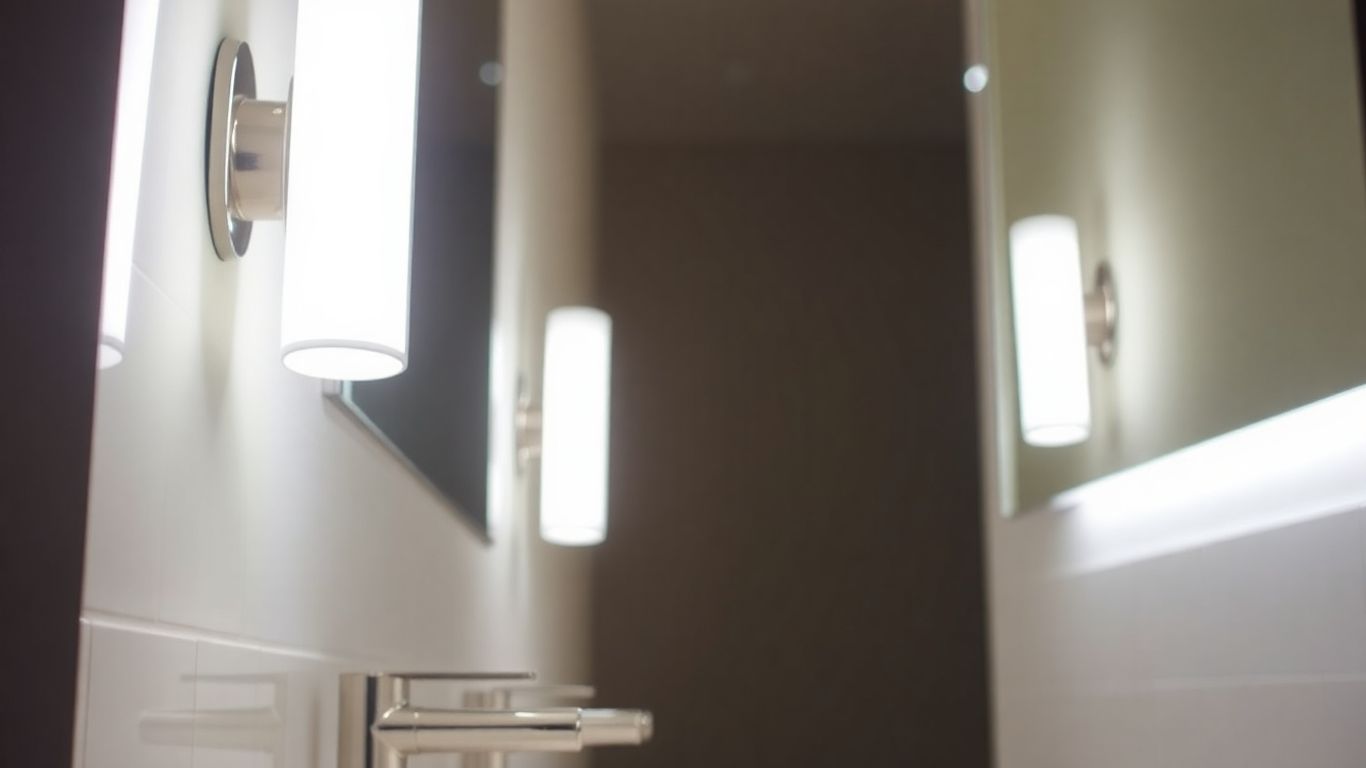
When it comes to bathroom lighting, LED bulbs are a really smart choice these days. They're super energy efficient, which means they won't hike up your electricity bill, and they last for ages. Honestly, you'll probably forget when you last changed them. Plus, they come in all sorts of brightness levels and colour temperatures, so you can get that perfect cosy or bright feel depending on what you're after.
Choosing the right LED bulb can make a big difference to how your bathroom looks and feels.
Here's a quick rundown of what to look for:
- Colour Temperature: This is measured in Kelvin (K). Lower K values (around 2700K-3000K) give a warmer, yellowish light, good for a relaxing vibe. Higher K values (4000K+) are cooler and whiter, which can be better for tasks like applying makeup.
- Colour Rendering Index (CRI): This tells you how accurately the bulb shows colours. For bathrooms, especially near the vanity, you want a high CRI (90+ is ideal) so that your skin tones and makeup colours look natural.
- Dimmability: If you want to control the mood, make sure your LED bulbs are labelled as 'dimmable'. You'll also need a compatible dimmer switch, but more on that later.
- Wattage Equivalent: LEDs use much less power than old-fashioned bulbs. A 10W LED might give you the same light as a 60W incandescent bulb, so check the packaging for the equivalent wattage to get the brightness you need.
It's worth remembering that not all LED bulbs work with all dimmer switches. If you try to dim a non-dimmable LED, it might flicker or just not work at all. Always check the bulb's packaging and your dimmer switch compatibility before you buy.
For bathrooms, especially in areas that might get steamy, look for bulbs that are rated for damp or wet locations if they're going into enclosed fixtures near water. It's just a bit of extra peace of mind.
9. Dimmers
Adding dimmer switches to your bathroom lighting is a really smart move. They give you so much control over the mood and brightness, which is brilliant for a room that gets used for all sorts of things, from getting ready in the morning to a relaxing soak in the evening. You can easily adjust the light to suit whatever you're doing.
Think about it: you want bright, clear light when you're shaving or applying makeup, but a softer, more subdued glow is perfect for winding down. Dimmers make this possible without needing multiple light fixtures.
Here's a quick rundown of why they're so good:
- Energy Saving: Using less light means using less electricity. Dimming your lights, even by a little bit, can make your bulbs last longer and cut down on your energy bills.
- Ambiance Control: Transform your bathroom from a functional space to a spa-like sanctuary with just a flick of a switch.
- Bulb Compatibility: It's super important to make sure your dimmer switch works with your specific light bulbs. Not all dimmers are made for all types of bulbs, especially newer ones like LEDs or CFLs. Always check the packaging or ask for advice to avoid buzzing or flickering lights.
When choosing a dimmer, remember to check its compatibility with your bulbs. For instance, LED and CFL bulbs often need specific types of dimmers, different from those used for older incandescent bulbs. Getting this right means your lights will work smoothly and look their best.
10. Waterproof LED Strips
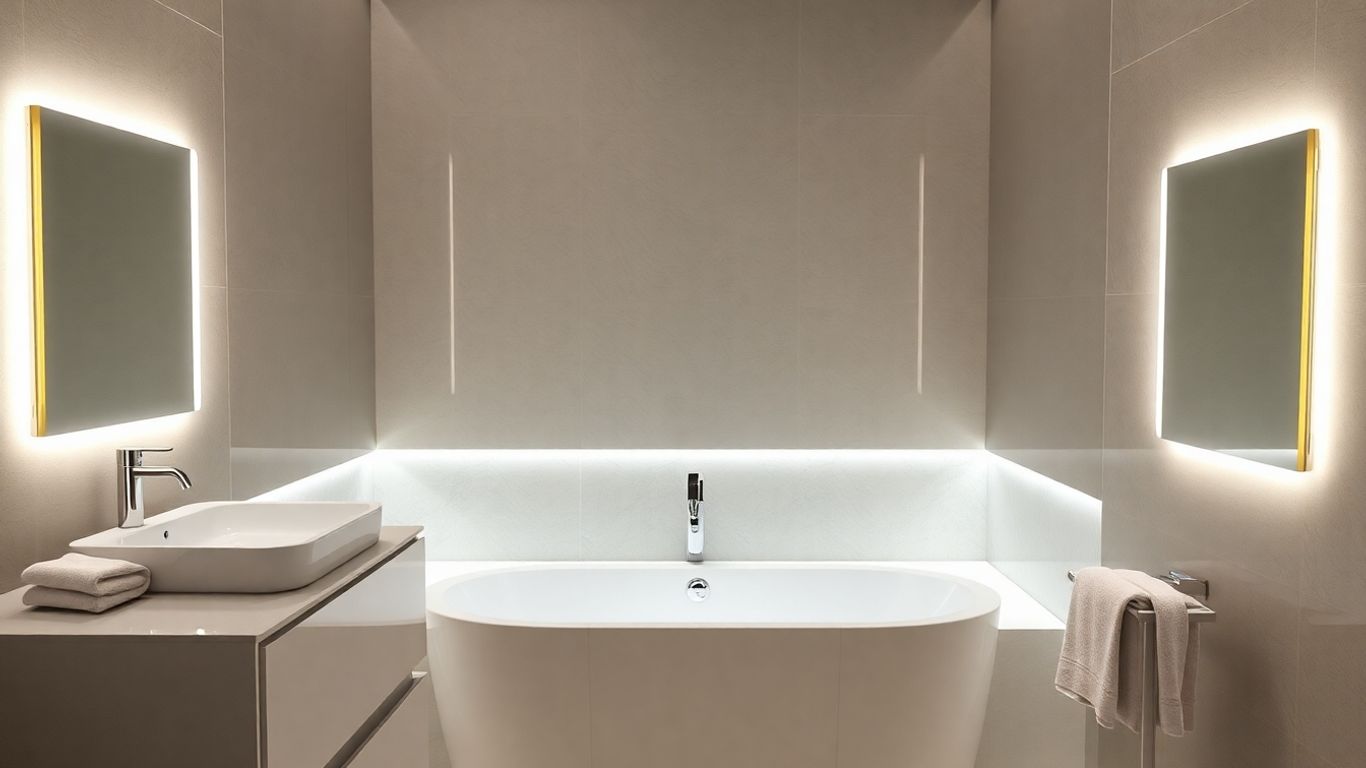
Waterproof LED strips are a really neat way to add some flair and extra light to your bathroom, especially in areas that get a bit damp. Think about putting them along the edge of your shower, under a floating vanity, or even inside a niche. They give off a soft, even glow that can make the whole space feel more inviting.
These strips are super flexible, which means you can get creative with where you put them. They're also really good on electricity and tend to last for ages, so they're a practical choice for a bathroom.
When you're looking at these, make sure you pick ones that are specifically rated for damp or wet locations. This is important for safety, especially if they're going anywhere near the shower or bath.
- Flexibility: Easy to bend and shape for creative installations.
- Energy Efficiency: Use less power compared to older lighting types.
- Long Lifespan: You won't be changing these out very often.
- Aesthetic Appeal: Can create a modern, sophisticated look.
They're a fantastic option for adding subtle illumination and a touch of modern design to tricky spots in your bathroom.
Always check the IP (Ingress Protection) rating on the LED strips. A higher IP rating means better protection against dust and water. For bathrooms, especially near water sources, you'll want a rating that indicates it can handle moisture well.
Looking for lights that can handle a bit of moisture? Our waterproof LED strips are perfect for bathrooms, kitchens, or even outdoor spaces. They're tough, bright, and built to last. Want to see how they can transform your home? Check out our range today!
Wrapping Up Your Bathroom Lighting Project
So, there you have it. Getting your bathroom lighting right might seem like a small detail, but it really makes a difference, doesn't it? From making sure you can actually see what you're doing at the sink to creating a nice, calm vibe for a long soak, good lighting is key. We've looked at different types of lights, how to place them, and even the best bulb colours to use. Don't forget about safety, especially in wet areas, and think about saving a bit of energy too. With these ideas, you can turn your bathroom from just a functional room into a space you actually enjoy spending time in. Happy lighting!
Frequently Asked Questions
What's the best type of light for a bathroom?
It's best to use a mix of lights! Think about lights for doing things like shaving or putting on makeup (task lighting), lights that make the whole room feel nice (ambient lighting), and lights that make cool features stand out (accent lighting). This way, your bathroom is useful and cosy.
Should bathroom lights be warm or cool?
Warm white light is usually best for bathrooms. It makes things look nice and cosy, and it's easier on your eyes. You might want brighter, daylight-like bulbs for your mirror if you need to see clearly for tasks like applying makeup.
Where should I put lights around the bathroom mirror?
Putting lights on either side of the mirror at eye level is a great idea. This stops shadows from appearing on your face, which is super helpful when you're getting ready. Lights above the mirror can also work, but side lights are often better for an even glow.
Are LED lights good for bathrooms?
Yes, definitely! LED bulbs are really good because they don't use much electricity and last for ages. They come in different colours and brightness levels, and many can be dimmed, which is perfect for creating different moods in your bathroom.
What are dimmers, and why do I need them in the bathroom?
Dimmers are switches that let you change how bright your lights are. They're great because you can make the bathroom brighter for tasks or softer and more relaxing when you're having a bath. Plus, using them can save energy and make your bulbs last longer.
Can I put lights in the shower?
Yes, you can! You just need to make sure the lights are waterproof or at least 'damp-rated' to be safe. Waterproof LED strips are a cool and flexible option that can add a nice glow inside your shower area.

