

Transform Your Home's Curb Appeal with Stylish Lights for Exterior of House
Making your house look good from the street, especially when it's dark, is a really good idea. It's not just about how it looks, but also about feeling safe and welcoming. Adding the right lights for the exterior of your house can make a huge difference. Think about how a few well-placed lights can change the whole vibe of your place. We'll look at how to pick lights that suit your home and make it stand out, even after the sun goes down.
Key Takeaways
- Using lights for the exterior of your house can make a big difference to how your home looks and feels, especially at night. It helps with both the look and security.
- Lights along paths and at your entrance help people see where they're going and make your home look more inviting.
- Highlighting parts of your house or garden with lights can create a dramatic and attractive look.
- Smart technology, like timers and motion sensors, can make your outdoor lighting more convenient and energy-efficient.
- Choosing the right style and material of lights that match your home's architecture is important for a good overall look and for durability.
Enhancing Your Home's Exterior With Thoughtful Lighting
First impressions count, and your home's exterior is the very first thing people see. Making it look good after dark is just as important as how it looks during the day. Good lighting can completely change how your house feels, making it look more welcoming and, let's be honest, a bit more impressive. It's not just about looks, though. Think about security – lights can really put off anyone who might be snooping around where they shouldn't be. Plus, it makes it much safer to get around your property when it's dark, stopping those nasty trips and falls.
The Impact of Exterior Lighting on First Impressions
When people drive up to your house for the first time, or even if they're just walking past, the way it's lit up makes a big difference. A dark, uninviting house can seem a bit unwelcoming. But with some well-placed lights, you can create a warm glow that draws people in. It shows that you care about your home and have put thought into its appearance, day and night. Think of it like a friendly smile for your house.
Creating Ambiance and Security After Dark
Once the sun goes down, your home doesn't have to disappear into the shadows. Thoughtful lighting can create a lovely atmosphere for relaxing evenings or for when you have guests over. Soft lighting on your patio or in the garden can make these spaces feel cosy and inviting. At the same time, brighter lights near doors and pathways act as a deterrent to unwanted visitors. It’s a clever way to balance making your home look good with keeping it safe.
Integrating Lighting into Your Home's Design
Exterior lighting shouldn't just be an afterthought; it should be part of your home's overall look. The style of the light fixtures themselves can complement your house's architecture, whether it's modern, traditional, or something in between. You can use lights to highlight interesting features, like textured brickwork or a beautiful tree. By planning your lighting, you can make sure it works with your home's design, rather than against it. It's about creating a cohesive look that feels right, both inside and out.
Illuminating Pathways and Entrances
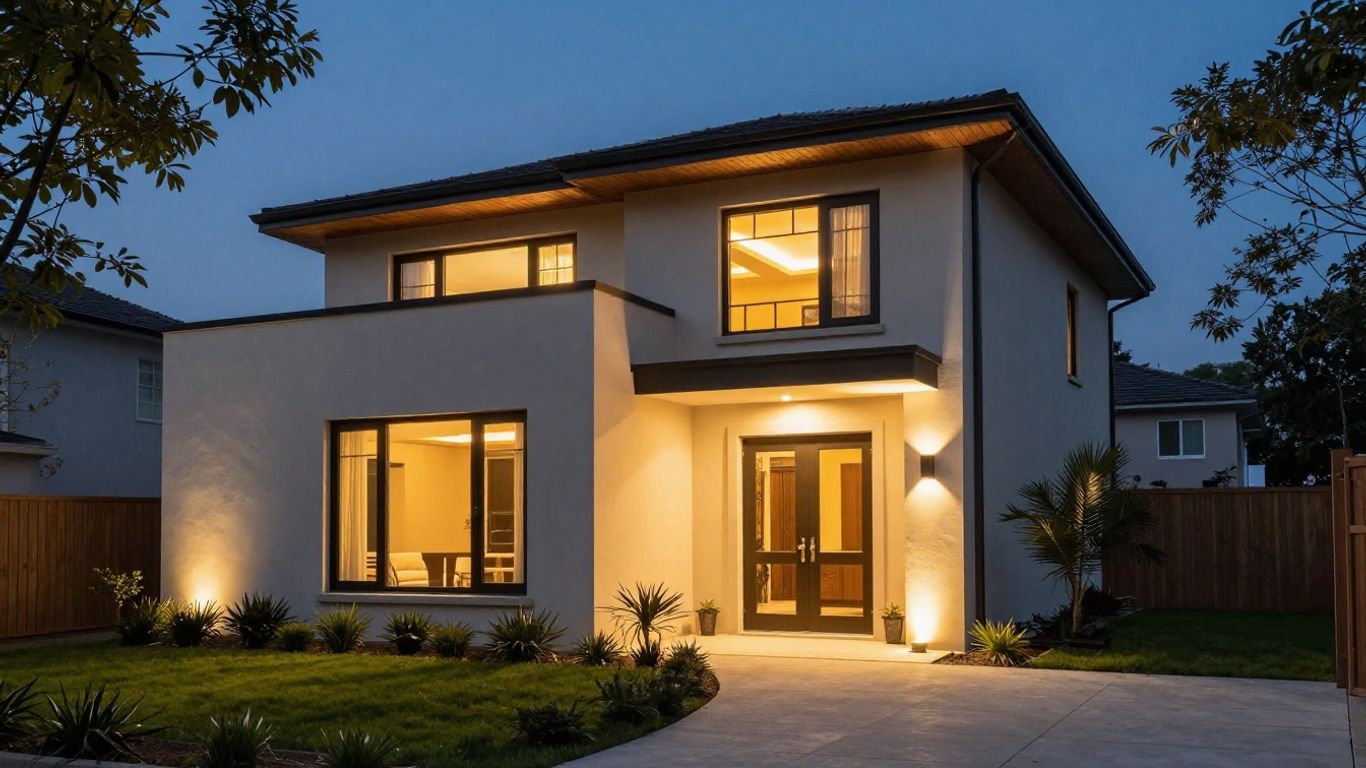
Getting your home's entrance and pathways lit up properly is more than just a practical necessity; it's a chance to really make a statement. It’s the first thing people see when they arrive, and good lighting can guide them safely while also setting a welcoming tone. Think about how a dark, uninviting path can make even the nicest house feel a bit off-putting. We want to avoid that, right?
Guiding Visitors with Stylish Pathway Lights
Pathway lights are brilliant for showing people where to walk. They're not just about preventing stubbed toes in the dark, though that's a big plus. They also add a lovely, soft glow to your garden and walkways. You can get all sorts of styles, from simple, modern stakes to more decorative bollard lights. Low-voltage LED path lights are a popular choice because they're energy-efficient and last ages. They cast a gentle light that highlights the path without being harsh. Choosing the right placement is key; you want them close enough to light the way but not so close that they create glare.
Securing Entry Points with Motion-Activated Fixtures
When it comes to your front door, garage, or any side entrances, security is a big consideration. Motion-activated lights are fantastic for this. They stay off until someone walks by, then bam, they light up. This can really startle any unwanted visitors and makes your home feel much safer. It’s a simple way to add a layer of protection without having lights on all night. You can find these in various styles, from sleek, modern designs to more traditional lantern looks. Some even connect to smart home systems, so you can get alerts on your phone.
Choosing the Right Lanterns for Your Doorway
The area right around your front door is prime real estate for making a good impression. Lanterns are a classic choice here. They hang above the door or are mounted on the wall beside it. They provide focused light right where you need it, illuminating the lock and the immediate steps. When picking lanterns, think about the overall style of your house. If you have a more traditional home, a classic carriage lantern might be perfect. For something more modern, a clean-lined, geometric design could work better. You can find some really lovely farmhouse chandeliers crafted with solid wood frames that would also suit a porch area. Remember to consider the bulb type too; warm white LED bulbs often give the most inviting glow.
Lighting your entrance and pathways is a smart move for both safety and aesthetics. It’s about creating a clear, safe route for guests and making your home look inviting from the moment they pull up. Don't underestimate the impact of well-chosen fixtures and bulbs.
Highlighting Architectural Features and Gardens
Uplighting Trees and Garden Beds for Dramatic Effect
Making your garden and the bits of your house that stick out look good after dark is a game-changer. Think about those big, old trees in your garden. Shining a light up from the base can really show off their shape and texture, making them look quite dramatic against the night sky. It's not just for trees, though. You can do the same for interesting bushes or even a nice bit of stonework on your house. It adds a whole new layer to your garden's look, making it feel more mysterious and inviting.
Accentuating Facades and Textures with Strategic Lighting
Don't let the best bits of your house's exterior disappear when the sun goes down. Strategic lighting can really bring out the details. If you've got a brick wall, some carefully placed lights can highlight the mortar lines and the brick's natural texture. It makes the whole building look more interesting. You can use lights mounted on the walls, or even low lights on the ground pointing upwards. It's all about drawing attention to the things that make your house unique.
Creating a Welcoming Atmosphere with Soft Garden Lights
Sometimes, it's not about making things super bright, but more about creating a cosy vibe. Soft, warm lights dotted around your garden beds or along a patio can make a huge difference. These aren't usually the bright, functional lights you'd use for security. Instead, think of them as mood setters. They can make your outdoor space feel more intimate and relaxing, perfect for sitting out on a summer evening. Using LED bulbs in a warm white colour is a good shout here, as they use less electricity and last ages. You can even get smart bulbs that let you change the colour or brightness from your phone, which is pretty neat.
Here are a few ideas for garden lighting:
- Pathway Lights: Small, low lights that line your garden paths. They're practical for not tripping but also look lovely.
- Spotlights: Use these to focus on a specific feature, like a statue or a particularly nice plant.
- String Lights: Drape these across a patio or between trees for a festive, cosy feel.
When choosing lights for your garden and architectural features, think about the colour of the light. Warm tones tend to be more relaxing and inviting, while cooler tones can feel more modern and stark. It's worth experimenting to see what works best for your space.
Smart Technology for Exterior Lighting
Automating Your Lights with Timers and Smart Controls
Forget fumbling for switches in the dark or leaving lights on all night. Smart technology has really changed the game for outdoor lighting. You can get simple timers that switch lights on and off at set times – think dusk till dawn, or specific hours that suit your routine. But it goes further than that. With smart controls, often managed through an app on your phone, you can control individual lights or groups of lights from anywhere. This means you can turn them on if you're unexpectedly delayed coming home, or even set up schedules that change with the seasons. It’s about convenience, sure, but also about making your home look lived-in and secure, even when you're not there.
Zoning Your Outdoor Lighting for Efficiency
This is where things get really clever. Zoning means you can divide your outdoor lighting into different areas or 'zones' and control them independently. So, you might have your pathway lights on a low setting all evening, your security lights by the garage set to come on with motion, and perhaps some accent lights on the patio that you only switch on when you're actually using the space. This isn't just about creating different moods; it's a big energy saver. Why light up the whole garden if you're just sitting on the deck? By only using the lights you need, when you need them, you cut down on electricity use and also reduce wear and tear on the bulbs, meaning they last longer. It’s a win-win, really.
The Benefits of LED Technology for Outdoor Illumination
When you're looking at smart outdoor lighting, you'll almost certainly be looking at LED bulbs. They've become the standard for good reason. For starters, they use a fraction of the energy compared to older types of bulbs, like halogens. This means your electricity bill won't skyrocket, even with lights on for extended periods. Plus, they last ages – we're talking years, not months, of use. This means far fewer bulb replacements, which is a real bonus when those bulbs are in awkward-to-reach outdoor fixtures. Modern LED bulbs also come in a huge range of colours and brightness levels, so you can get that warm, inviting glow for your garden or a brighter, more functional light for your driveway. They're tough, efficient, and give you loads of flexibility in how you light up your home's exterior.
Smart outdoor lighting offers a blend of convenience, security, and energy efficiency. By using timers, motion sensors, and app-based controls, you can tailor your home's illumination to your lifestyle and needs. Combining this with the long-lasting, low-energy performance of LED bulbs makes for a practical and stylish upgrade to your home's exterior.
Selecting the Right Fixtures for Your Home
Exploring Different Types of Exterior Light Fixtures
Choosing the right lights for the outside of your house is more than just picking something that looks nice. It's about finding pieces that work with your home's style and do the job you need them to do, whether that's lighting up a path or just making the place look a bit more welcoming after dark. There's a whole load of options out there, from simple wall lanterns to more elaborate post lights. Think about what you want the lights to achieve. Do you need bright lights for security, or softer ones to create a nice atmosphere? The type of fixture you choose will really affect the overall look.
Considering Materials and Finishes for Durability and Style
When you're looking at outdoor lights, the material they're made from is a big deal. You want something that can stand up to the weather, you know, rain, sun, maybe even a bit of frost. Things like aluminium, brass, or stainless steel are usually pretty good choices because they don't rust easily. Then there's the finish. Do you want something that looks modern, like brushed nickel, or more traditional, like oil-rubbed bronze? The finish can really tie the lights in with the rest of your home's look. It's a bit like choosing paint colours, really – you want it to all go together.
Matching Fixture Styles to Your Home's Architecture
This is where it all comes together. The style of your house should really guide your choice of light fixtures. If you've got a modern place, you'll probably want something sleek and simple. For a more traditional home, maybe something with a bit more detail, like a classic lantern style. It's not just about the front door, either. Think about lights for your garage, any side paths, or even lights that point upwards to highlight features of the building. Getting the style right makes a huge difference to how your home looks from the street.
Here's a quick rundown of common styles:
- Traditional: Often features classic shapes, like carriage lanterns or gooseneck lights. Good for older homes or those with a classic design.
- Modern/Contemporary: Think clean lines, geometric shapes, and minimalist designs. Often uses materials like metal and glass.
- Rustic/Farmhouse: Might include lights with a weathered look, darker finishes, or designs inspired by nature.
- Industrial: Often uses exposed bulbs, metal cages, and raw finishes. Can work well for homes with a more edgy or urban feel.
It’s easy to get caught up in the latest trends, but sometimes the best approach is to look at what already works with your home. A light fixture that complements your house's existing architecture will always look better than something that clashes, no matter how fashionable it is.
Professional Installation and Design
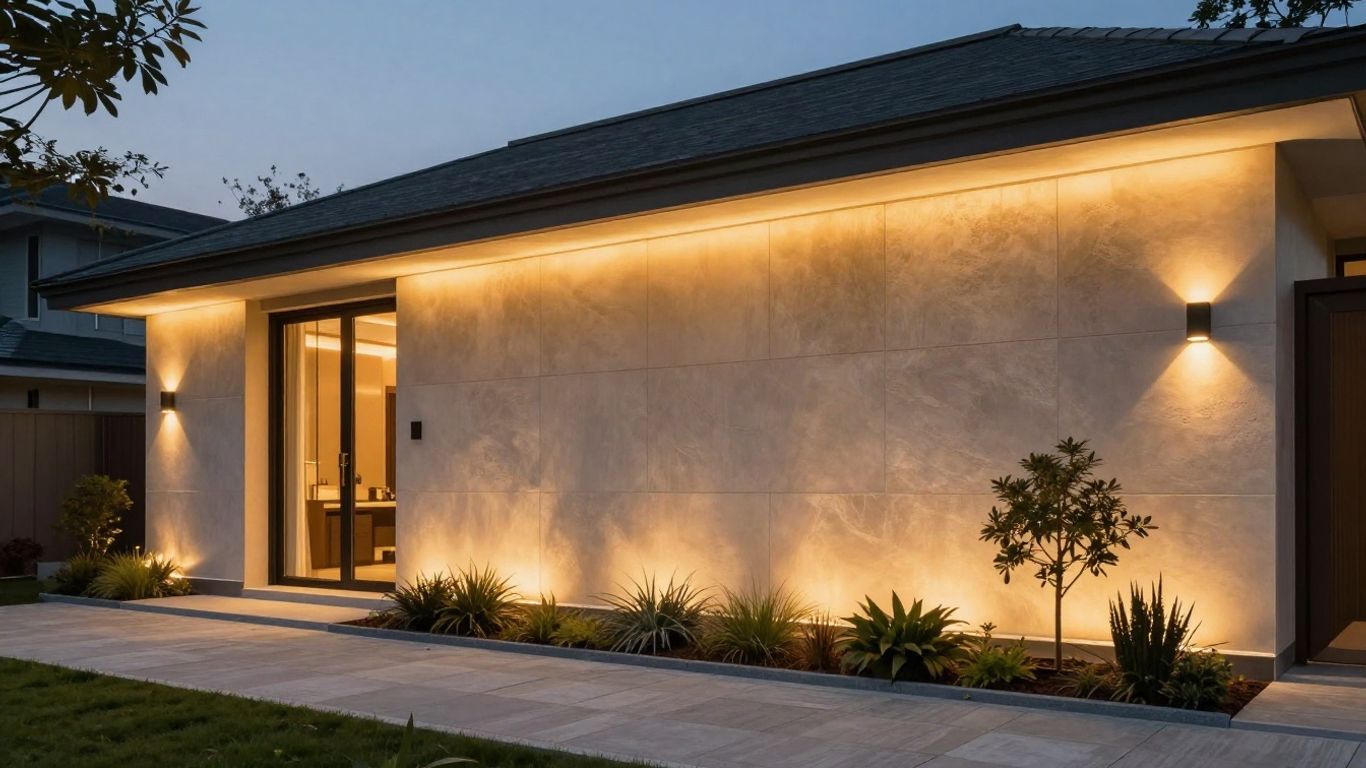
The Importance of Professional Landscape Lighting Design
Getting the lighting right for the outside of your house isn't just about sticking a few bulbs in fixtures. It's about creating a whole look and feel. A professional designer can look at your home's architecture, your garden, and even the surrounding landscape to figure out the best places for lights. They know how to use light and shadow to make your house look its best after dark, highlighting features you might not even notice during the day. It’s not just about making things look pretty, either. They’ll also think about how the lights will work together, making sure you don’t have glaring spots or dark corners where you don’t want them. A well-thought-out design makes a huge difference to the final result.
Ensuring a Seamless and Safe Installation Process
Once you've got a plan, the next step is getting it all put in. This is where professional installation really comes into its own. These folks know how to run wires safely, connect everything up properly, and make sure all the fixtures are secure. They’ll also be aware of any local regulations or building codes you need to follow, which can save you a lot of hassle. Plus, they’ve got the right tools and know-how to get the job done without damaging your property. It’s about making sure everything works as it should, looks neat and tidy, and is safe for everyone.
Maximising Your Investment in Exterior Lighting
Think of professional design and installation as an investment. When it's done right, your exterior lighting will last longer, look better, and perform more reliably. You’ll avoid costly mistakes, like buying the wrong type of bulbs or fixtures that don’t stand up to the weather. A good system, designed and installed by experts, can also be more energy-efficient, especially if you're using modern LED light bulbs. This means you save money on your electricity bills over time. Plus, a beautifully lit home not only looks great but can also make it feel more secure and welcoming, adding to your property's overall appeal and value.
- Fixture Placement: Professionals know where to position lights to avoid glare and create the desired effect.
- Wiring and Power: They handle the electrical work safely and efficiently.
- Fixture Selection: Guidance on choosing durable, weather-resistant, and aesthetically pleasing lights.
- Maintenance: Advice on how to care for your new lighting system.
Hiring professionals means you get a system that's not only visually appealing but also safe, reliable, and built to last. It takes the guesswork out of the process and gives you peace of mind.
Need help making your space look its best? Our team offers top-notch installation and design services to bring your vision to life. We make sure everything is set up perfectly for you. Ready to transform your home or office? Visit our website today to learn more and get a free quote!
Wrapping Up Your Exterior Lighting Project
So, there you have it. Making your home look good after dark doesn't have to be a massive job. A few well-placed lights can really change how your place looks, making it feel more welcoming and a bit safer too. Whether you're just adding a couple of path lights or going all out with spotlights on the trees, it's all about making your home feel just right. Don't forget to think about the type of bulbs you're using – warm LEDs are usually the way to go for a nice, cosy feel. It’s a simple way to give your home a bit of a refresh and make those evenings outside much more enjoyable.
Frequently Asked Questions
Why is outdoor lighting important for my home?
Adding lights outside your house makes it look nicer, especially when it's dark. It also makes your home safer by lighting up dark spots where people might trip or where unwanted visitors could hide. Think of it as making your home look good and feel secure all at the same time.
What kind of lights should I use for my garden path?
For garden paths, low-energy LED lights are a great choice. They're not too bright but light up the way so people don't trip. They also give your garden a lovely, warm feel. You can get them in different styles to match your garden.
How can lights help make my home more secure?
Lights that turn on when they sense movement are brilliant for security. Placing them near doors, the garage, or any shadowy areas means they'll light up suddenly if someone approaches. This can scare off people who shouldn't be there and lets you know if something's happening.
What are 'uplighting' and how do I use it?
Uplighting means pointing lights upwards from the ground. You can use it to highlight special things like tall trees, interesting walls, or garden features. It creates a really dramatic and fancy look for your home and garden after the sun goes down.
Are LED lights good for outdoor use?
Yes, LED lights are fantastic for outside. They use much less electricity than old bulbs, so they save you money on your energy bills. Plus, they last a really long time, meaning you won't have to change them very often. You can also find them in warm colours that look very nice.
Should I hire someone to install my outdoor lights?
While you can put up some lights yourself, it's often best to get a professional. They know how to place lights perfectly to make your home look its best and be safe. They also make sure all the wires are hidden and the installation is done properly and safely, which is really important.

