

Mastering the Art of Light Fixture Hanging: A Guide to Stylish Illumination
Hanging lights can really change a room, can't they? It's not just about shoving a bulb in a socket; it's about getting the whole look and feel right. Whether you're trying to brighten up your kitchen island or add a bit of drama to your dining room, the way you hang a light fixture matters. This guide is all about making sure your light fixture hanging is spot on, from picking the right one to getting it safely installed and looking good. We'll cover how to choose, fit, and care for your hanging lights so they do more than just light up a room – they make it look great.
Key Takeaways
- When picking a hanging light fixture, think about what you need it for, how much light you want, and what style, finish, and controls will work best.
- Always follow electrical safety rules, make sure the mounting is solid, and check that there's enough clearance to avoid bumps.
- Getting the size and placement right is key, and using hanging lights as part of a layered lighting plan can really make a space feel more complete.
- If you're using more than one hanging light, find something that ties them all together, like a similar colour or shape, and play with different heights and weights for visual interest.
- Keep your hanging lights looking their best by dusting them regularly, cleaning them according to their material, and checking that the bulbs are the right type and wattage.
Selecting The Perfect Hanging Light Fixture
Choosing the right hanging light fixture is a bit like picking the perfect accessory for an outfit – it can really tie the whole room together. It's not just about brightness, though that's a big part of it. You've got to think about what the light is actually for and how it's going to look.
Consider The Purpose Of Each Fixture
Before you get lost in a sea of shiny glass and metal, stop and think. What job does this light need to do? Is it the main source of light for the whole room, like a big chandelier in the dining room? Or is it more for a specific task, like a pendant light over the kitchen counter where you'll be chopping vegetables? Maybe it's just there to add a bit of mood, like a small, decorative lamp hanging in a corner. Knowing the purpose helps you decide on the style, size, and how much light you actually need.
Evaluate Lighting Needs And Bulb Choices
Once you know what the light is for, you can figure out the best way to light it up. For general room lighting, you'll want something that spreads light around nicely. For task lighting, you need it to be more focused. And then there are the bulbs themselves. You've got your standard ones, but these days, there's a whole world of options. LED bulbs are super popular because they don't use much electricity and last for ages. You can get them in all sorts of colours and brightness levels. Some even let you change the colour temperature, from a warm, cosy glow to a bright, crisp white. It's worth checking what kind of bulbs the fixture takes and what the maximum wattage is, so you don't overload anything. Smart bulbs are also a thing now, letting you control them from your phone, which is pretty neat.
Material, Finish, And Control Options
Now for the fun part – the look! Hanging lights come in all sorts of materials. You've got metal ones, which can be sleek and modern or rustic and industrial depending on the finish. Glass is always a classic, from clear to frosted to coloured. Fabric shades give a softer, warmer feel. Think about what fits with the rest of your room's decor. Do you want something that stands out, or something that blends in? And don't forget about control. Do you want a simple on-off switch, or would you prefer a dimmer so you can adjust the mood? Some fixtures can even be hooked up to smart home systems. It’s all about making the light work for you and your space.
Picking the right hanging light isn't just about aesthetics; it's about functionality too. A fixture that looks great but doesn't provide the right kind of light can be a real letdown. Consider how the light will spread, whether it will cause glare, and if it suits the activities that happen in that area.
Ensuring A Safe Light Fixture Hanging Installation
Adhering To Electrical Codes And Circuit Load
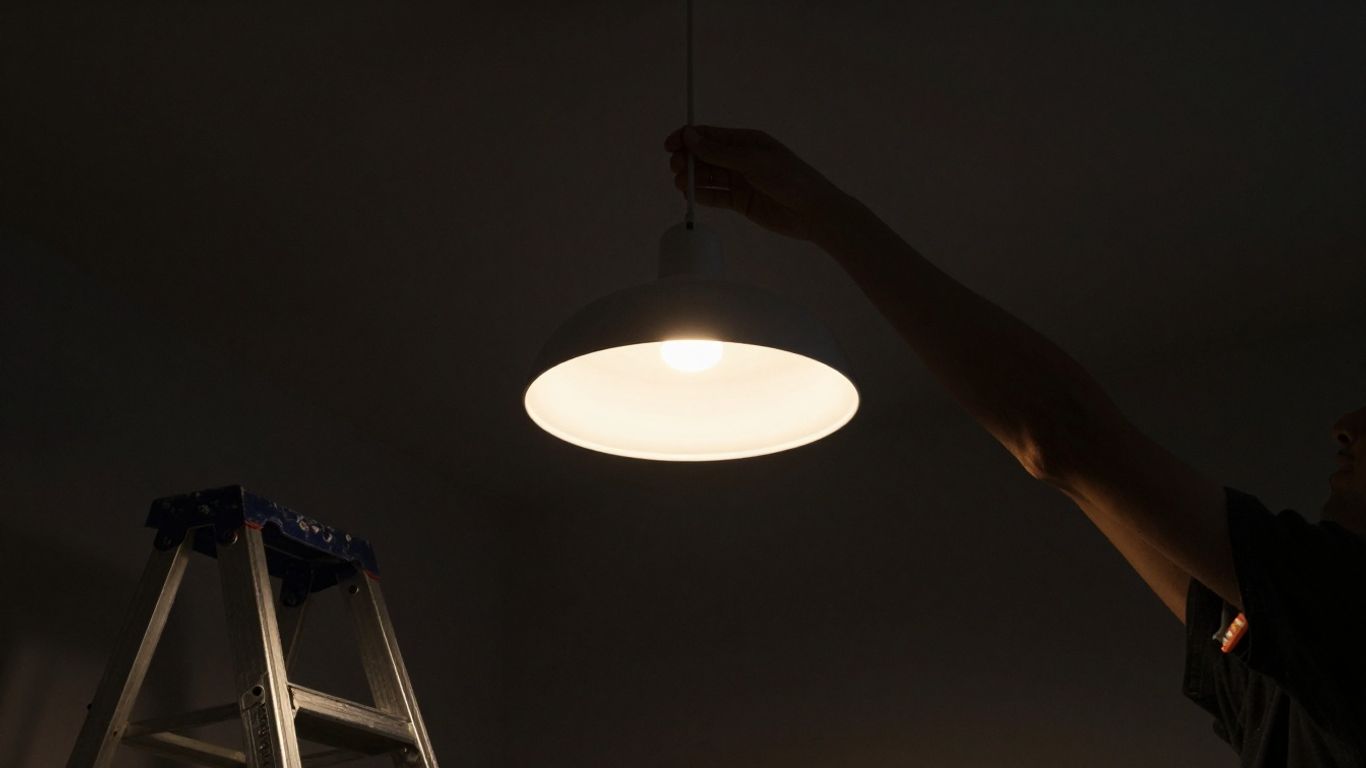
Before you even think about drilling holes or stripping wires, it's super important to get clued up on the electrical side of things. You don't want to end up with a dodgy connection or, worse, trip the breaker every time you flick the switch. Always make sure you're following your local electrical regulations. These aren't just suggestions; they're there to keep you and your home safe. Think about the circuit you're using. Is it already chugging along with a TV, a laptop, and maybe a kettle? Adding a new light fixture, especially a big chandelier, could overload it. Check the total wattage the circuit can handle and compare it to what your new light, plus everything else on that circuit, will draw. It’s better to be safe than sorry, and if you’re not sure, it’s always worth getting a qualified electrician to check it out.
Proper Insulation And Secure Mounting
Once you've got the wiring sorted, you need to make sure everything is tucked away neatly and securely. Any exposed wires are a big no-no. Use proper wire connectors, like those little plastic nuts, and give them a good twist. Then, wrap them with electrical tape just to be extra sure. It stops any stray bits of wire from touching anything they shouldn't. And when it comes to actually hanging the light, don't just rely on the decorative chain or cord. The electrical box in the ceiling is what holds the weight. Make sure it's rated for the fixture's weight and is properly secured to the joists. You don't want your beautiful new light suddenly making a dramatic exit.
Height Clearance And Professional Assistance
Think about where people will actually be walking or standing. You don't want anyone walking into a hanging pendant light, especially in a busy hallway or over a dining table. A good rule of thumb for areas with foot traffic is to have at least 2 metres of clearance from the floor to the bottom of the fixture. For dining tables, it's usually a bit lower, around 75-90 cm above the tabletop. But honestly, it depends on the size of the fixture and the table. If you're feeling a bit wobbly about any part of this process, whether it's the wiring, the mounting, or just figuring out the right height, don't hesitate to call in a professional. A qualified electrician can get it done safely and correctly, giving you peace of mind. It’s usually a small price to pay for avoiding a potential disaster.
Safety first, always. When in doubt, call a pro. It's not worth the risk of a shock or a falling fixture.
Achieving Stylish Illumination With Hanging Lights
Scale, Proportion, and Layered Lighting
When you're picking out a hanging light, think about how big it is compared to the room and the furniture. A massive chandelier might look great in a grand hall, but it'll probably overwhelm a small dining nook. Getting the scale right means the light fits in without looking lost or taking over the whole space. It's all about balance. And don't forget about layering your lights. A hanging fixture is just one piece of the puzzle. You'll want to combine it with other lights, like wall sconces or floor lamps, to create a more dynamic and functional lighting scheme. This way, you can adjust the overall brightness and highlight different areas.
Versatile Applications For Hanging Lights
Hanging lights are surprisingly adaptable. They're not just for the dining room anymore. Think about a stylish pendant light over your kitchen island, a cluster of smaller lights in a reading corner, or even a statement piece in the hallway to welcome guests. They can work in almost any room, from the bedroom to a covered patio, adding both light and personality. You can even find outdoor-rated ones for pergolas or seating areas, which is a nice touch for summer evenings.
Creating Ambiance Through Design Choices
The actual design of the hanging light plays a huge role in the mood it sets. A fixture with a frosted glass shade will give off a softer, more diffused light, perfect for a relaxed vibe. On the other hand, a clear glass or metal design might cast a more focused beam, which is good for task lighting or creating a bit more energy. The colour temperature of the bulb matters too. Warmer bulbs (around 2700-3000K) feel cosy, while cooler ones (4000-5000K) are brighter and more energising. And don't underestimate the power of dimmers! Being able to adjust the brightness lets you switch from bright task lighting to a soft, intimate glow with just a flick of a switch. It’s amazing how much difference a simple dimmer can make.
Choosing the right hanging light isn't just about picking something that looks nice; it's about how it makes you feel in the space. Consider the light quality, the colour temperature of the bulbs, and how you can control the brightness to suit different activities and moods throughout the day.
Combining Multiple Hanging Light Fixtures
So, you've got more than one spot where a hanging light would look brilliant. Great! But how do you stop it from looking like a jumble sale of lamps? It's all about making them work together, not against each other. Think of it like a band – everyone has their own instrument, but they play the same song.
Finding A Unifying Design Element
This is probably the most important bit. You need something that ties all your chosen lights together. It could be the finish – maybe they're all brushed nickel, or a warm brass. Or perhaps it's the general style, like all industrial-inspired pendants, or a collection of minimalist globes. Even a shared colour can do the trick. Without a common thread, your lights will just look random. It’s this shared characteristic that stops the room from feeling chaotic.
Varying Sizes, Heights, And Visual Weight
Once you've got your unifying element, you can play around. Don't be afraid to mix things up a bit. Having lights that are all the exact same size and hung at the same height can look a bit… well, boring. Try using a few different sizes, or hanging them at slightly different levels. This adds depth and stops the eye from just gliding over them. Imagine a cluster of pendant lights over a kitchen island – one might be slightly larger, or hung a touch lower than the others. It creates a more dynamic and interesting look. Just make sure they aren't so close they bump into each other, visually or literally!
Coordinating Finishes And Colours
This ties back to the unifying element, but it's worth its own mention. Think about how the finishes and colours of your lights will interact with the rest of your room. Do you have a lot of wood furniture? Maybe a light with some natural wood accents would work well. Is your decor mostly cool tones? Stick with finishes like chrome or matte black. It’s about making the lights feel like they belong, not like they were just dropped in. You don't need everything to match perfectly, but a bit of coordination goes a long way to making the whole space feel put together.
Maintaining Your Hanging Light Fixtures
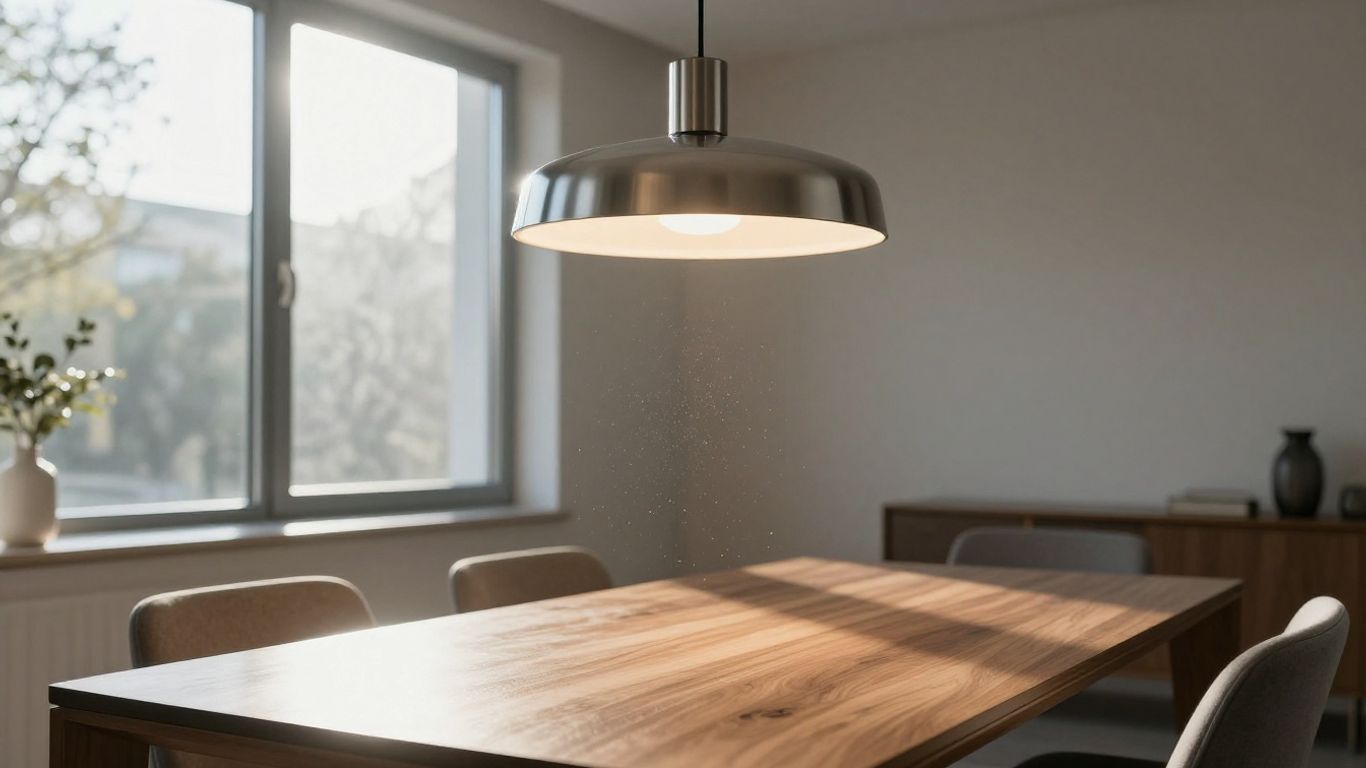
Keeping your hanging light fixtures looking good and working properly doesn't have to be a chore. A little bit of regular attention can make a big difference, stopping dust build-up and keeping everything secure. It's all about simple steps to keep your stylish illumination shining bright.
Regular Dusting For Longevity
Dust is the enemy of a good shine. It settles on everything, making even the most beautiful fixture look a bit sad and dull. A quick dust-off every few weeks is usually enough. You can use a soft microfibre cloth, a feather duster, or even the brush attachment on your vacuum cleaner set to a low setting. Just be gentle, especially around delicate parts.
Cleaning Specific Materials
Different materials need different care. For glass or crystal shades, a damp cloth with a tiny bit of mild washing-up liquid works wonders. Just make sure to dry them thoroughly afterwards to avoid water spots. Metal finishes might need a specific cleaner, or sometimes a mix of white vinegar and water can do the trick, but always test in an inconspicuous spot first. For fabric shades, a gentle vacuum or a dry cleaning sponge is best.
- Glass/Crystal: Mild soap and water, followed by thorough drying.
- Metal: Specific metal polish or a vinegar/water mix (test first).
- Fabric: Vacuum with brush attachment or dry cleaning sponge.
- Plastic/Acrylic: Mild soap and water, dry with a soft cloth.
Checking Connections And Bulb Compatibility
It's a good idea to periodically check that everything is still securely attached. Give the fixture a gentle wobble (make sure the power is off first!) to see if anything feels loose. Also, always use the right kind of bulbs. Check the fixture's label or manual for the maximum wattage and type of bulb it can take. Using the wrong bulb, like a super-bright LED bulb when a lower wattage is specified, can cause overheating. If you're replacing a bulb, make sure it's the correct size and type – think about whether you need a standard bulb, a smart bulb, or a specific range light bulbs for a particular effect.
Always remember to switch off the power at the mains before you start any cleaning or maintenance. It might seem obvious, but it's the most important safety step you can take when dealing with anything electrical.
Keeping your hanging light fixtures looking their best is simple. A quick wipe-down now and then can make a big difference. For a deeper clean, especially on glass or delicate parts, it's wise to know the right way to handle them. Don't let dust dull your shine! Visit our website for detailed guides on how to clean and care for all types of hanging lights.
Wrapping Up Your Lighting Project
So, there you have it. Hanging lights might seem a bit daunting at first, especially when you're staring at wires and instructions. But honestly, with a bit of patience and by following the steps we've gone through, it's totally doable. You can really change the feel of a room just by getting the lighting right. Whether you're going for a cosy vibe or something more dramatic, the right fixture makes all the difference. Don't forget to check out places like BulbBarn for all your bulb needs, and remember, if you're ever unsure about the electrics, it's always best to get a professional in. Happy hanging!
Frequently Asked Questions
What exactly is a hanging light?
A hanging light, often called a pendant light, is basically a light fixture that dangles down from your ceiling using a wire, chain, or a rod. It's designed to shine light downwards and often looks quite stylish, adding to your room's look.
Why would I want to use hanging lights?
Hanging lights are great because they can light up a specific spot really well, like over your dinner table or kitchen counter. They also look good and can make a room feel more welcoming. Plus, they don't take up floor space, which is handy!
Where are the best places to put hanging lights?
You see them a lot over dining tables and kitchen islands because they light up those areas perfectly. They also look fantastic in living rooms or hallways to make an entrance feel special, and even by the bedside instead of a table lamp.
How do I pick the right hanging light for my room?
Think about what the light needs to do – is it for reading or just making the room look nice? Also, consider the size of your room and how high your ceiling is. The material and colour of the light should also match your room's style. Don't forget to check what kind of bulbs it takes!
Is it safe to hang a light myself?
It can be, but you need to be careful. Always make sure the electricity is off before you start. Check that the ceiling can hold the light's weight and that you're following all the rules for wiring. If you're not sure, it's always best to get a qualified electrician to do it for you.
How do I keep my hanging lights looking good?
The easiest thing is to dust them regularly with a soft cloth. For tougher dirt or specific materials like glass or metal, you might need a special cleaner. It's also a good idea to check that the bulbs are still the right type and wattage for the fixture every now and then.

