

Transform Your Home with Stylish Exterior Lighting
Making your home look good from the outside after dark is more than just a nice idea. It makes the place feel safer and more welcoming, and honestly, it just looks better. We’re going to talk about how to pick the right lighting exterior fixtures to really make your house stand out. It’s not as complicated as it sounds, and the results can be pretty dramatic.
Key Takeaways
- When planning your exterior lighting home, think about your outdoor space, where you need light most, and any garden bits you want to show off.
- Understand the difference between ambient light (general glow), task light (for doing things), and accent light (to point out features).
- Choose exterior lighting home fixtures made from tough stuff that matches your house style, and get the right light colour for the mood you want.
- Mixing different kinds of light makes your home’s outside look more interesting and gives it depth.
- Use smart placement, motion sensors, and timers with your exterior lighting home to make your place more secure.
Planning Your Exterior Lighting Home
Right then, let's get down to planning your outdoor lighting. It might seem like a big job, but breaking it down makes it much more manageable. Think of it as painting a picture with light, making your home look its best when the sun goes down.
Assessing Your Outdoor Space
First things first, take a good wander around your property. What are you working with? Look at the different areas – the front door, the driveway, the garden paths, the patio, maybe even that nice big tree at the back. Every spot has its own purpose and needs. Where do you walk most often? Where do you sit outside? Where do you want to draw attention?
Identifying Key Illumination Areas
Now, let's pinpoint the spots that really need some light. Your front entrance is a no-brainer; you want visitors to feel welcomed and see where they're going. Pathways need to be lit so no one trips over a rogue paving stone in the dark. If you've got a seating area outside, you'll want enough light to relax or entertain without it feeling like a spotlight. Even the garage doors or side gates are worth considering.
Here’s a quick way to think about it:
- Entryways: Front door, back door, side doors.
- Pathways: Garden paths, steps, driveway.
- Social Areas: Patios, decks, balconies.
- Functional Spots: Garage doors, sheds, utility areas.
Considering Landscape Features for Accentuation
Don't forget about your garden! Got a lovely old tree, a striking shrub, or a water feature? These are perfect candidates for accent lighting. A well-placed spotlight can make a tree look dramatic at night, or highlight the texture of a garden wall. It adds another layer to your outdoor space and makes it feel more finished. Think about what you like to look at in your garden during the day – chances are, you'll want to see it at night too.
Planning is key here. It's not just about sticking lights up randomly; it's about creating a mood and making your home look its best after dark. Think about how the light will fall and what it will highlight.
Understanding Different Types Of Exterior Lighting Home
When you're thinking about lighting up your home's outside, it's not just about sticking a few bulbs in some holders. There are actually different kinds of lights, and they all do slightly different jobs. Getting this right makes a big difference to how your place looks and how you can use your outdoor areas.
Layering Light For Maximum Impact
Don't just think about one type of light; mixing them is key to creating a sophisticated look. Layering means using different kinds of lighting together to create depth and interest. It stops your home from looking like a flat, brightly lit stage and instead creates areas of light and shadow, making your exterior more inviting and dynamic. It guides the eye, making certain features stand out while others recede gently. This interplay makes your home look more interesting, especially from the street. It’s about creating a mood, not just banishing darkness.
Ambient Lighting: Your Base Layer
This is your main, all-over light. Think of it as the base layer that makes sure you can see where you're going without tripping over things. Ambient lighting is what sets the general mood for your garden or driveway. It's not about bright, harsh light, but more about creating a welcoming glow. You'll often see this from wall-mounted fixtures near the front door, or perhaps post lights along a driveway. The goal here is to provide enough light so that your outdoor spaces feel safe and accessible after dark.
Task Lighting: For Specific Jobs
Task lighting is more focused. It's for when you need a bit more light for a particular job. Maybe you're doing some late-night gardening, reading on the patio, or need to see clearly when you're unlocking the front door. Fixtures like deck lights or specific pathway lights fall into this category. They direct light where it's needed most, making activities easier and safer. For instance, good lighting over a barbecue area is a classic example of task lighting.
Accent Lighting: Drawing Attention
This is where you get to be a bit more creative. Accent lighting is used to draw attention to specific things you want to show off. It could be a particularly nice tree in the garden, a textured wall, or even a garden ornament. Spotlights are often used for this, pointing directly at the feature. It adds depth and visual interest, making your home's exterior more dynamic and eye-catching. It's the finishing touch that can really make your property stand out.
Seeing what others have done is often the best way to get ideas. Many companies showcase stunning examples of homes transformed by thoughtful exterior lighting. You'll see how a simple pathway light can lead you to a beautifully lit entrance, or how uplighting a large oak tree can create a dramatic silhouette. These examples often demonstrate how a mix of lighting types works best. For instance, a well-lit patio for entertaining might be combined with subtle garden lights that highlight flowerbeds, all under the gentle wash of ambient light from the house itself. It really shows you the possibilities and can help you visualise what might work for your own place.
Creating Depth And Visual Interest With Exterior Lighting Home
Making your home look good from the outside after dark is more than just a nice idea. It makes the place feel safer and more welcoming, and honestly, it just looks better. We’re going to talk about how to pick the right lighting exterior fixtures to really make your house stand out. It’s not as complicated as it sounds, and the results can be pretty dramatic.
Mixing Lighting Layers For Sophistication
Think of your home's exterior lighting like painting a picture. You don't just slap one colour on and call it done, right? It's all about using different types of light to create depth and interest. Combining ambient, task, and accent lighting is the secret sauce to making your outdoor space truly shine after dark. When you mix these layers, you stop your home from looking like a flat, brightly lit stage. Instead, you create areas of light and shadow, which is what gives your exterior that inviting, sophisticated feel. It guides the eye, making certain features pop while others recede gently. This interplay makes your home look more dynamic and interesting, especially from the street. It’s about creating a mood, not just banishing darkness.
- Ambient Lighting: This is your base layer, like the sky in your painting. It provides general illumination, making sure you can see where you're going. Think soft glows from wall lanterns or subtle uplighting on trees.
- Task Lighting: This is for specific jobs. This could be a brighter light over your front door for fumbling with keys, or a focused beam on your barbecue area.
- Accent Lighting: This is where you draw attention to special features – a beautiful garden statue, an interesting tree trunk, or textured brickwork. Using spotlights or small ground lights for this can make a huge difference.
Learning From Inspiring Examples
Seeing what others have done is often the best way to get ideas. Many companies showcase stunning examples of homes transformed by thoughtful exterior lighting. You'll see how a simple pathway light can lead you to a beautifully lit entrance, or how uplighting a large oak tree can create a dramatic silhouette. These examples often demonstrate how a mix of lighting types works best. For instance, a well-lit patio for entertaining might be combined with subtle garden lights that highlight flowerbeds, all under the gentle wash of ambient light from the house itself. It really shows you the possibilities and can help you visualise what might work for your own place.
Choosing The Right Mix Of Lighting Types
Choosing the right mix of these lighting types is key. Too much of one kind can make things look odd. For instance, only having bright ambient light might feel a bit like a security floodlight, while only having accent lights might leave pathways in the dark. It's about finding that balance that suits your home and how you use your outdoor space.
The decisions you make about light colour temperature and fixture placement can dramatically alter how materials and textures are perceived after dark. A warm white light might make brickwork feel cosy, while a cooler tone could highlight modern metal features. It’s not just about brightness; it’s about the quality and character of the light itself.
Enhancing Security With Exterior Lighting Home Fixtures
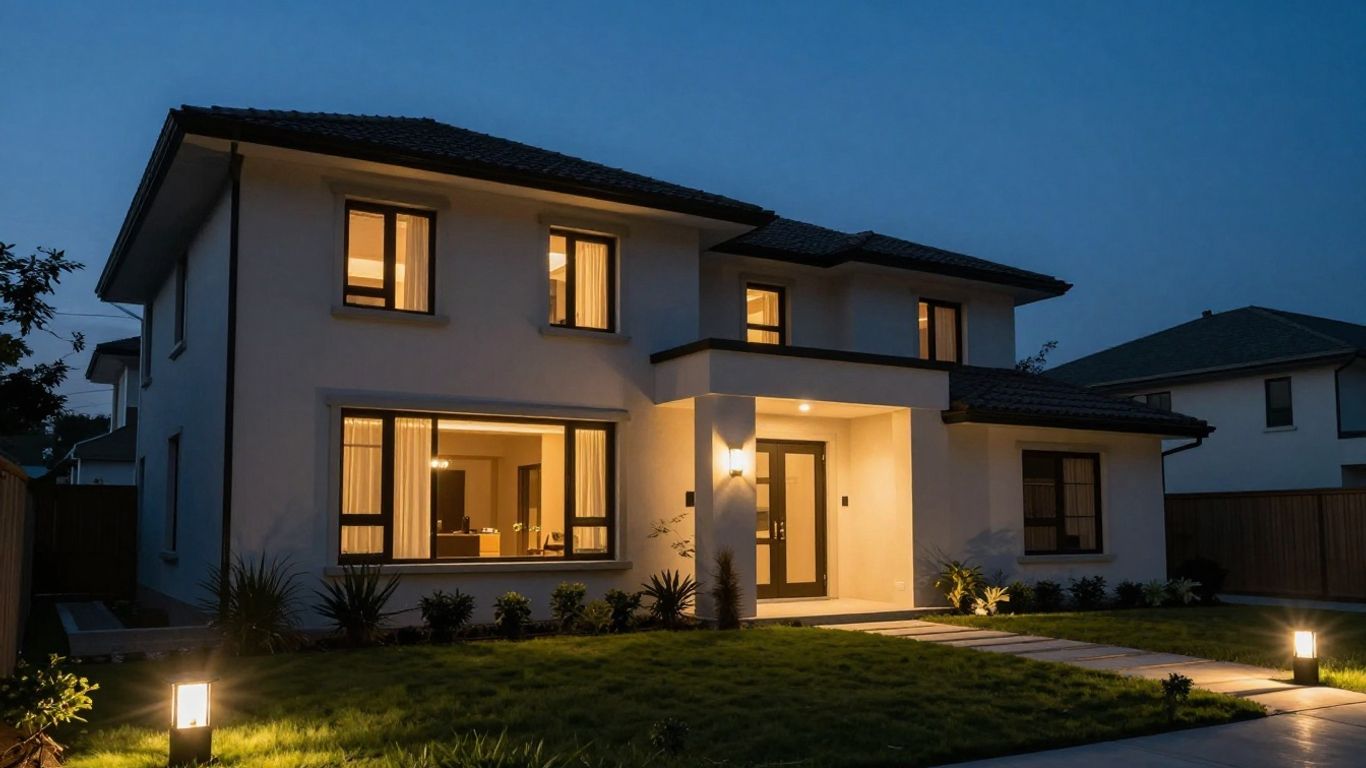
Making your home feel safe and sound is a big deal, isn't it? It turns out that your exterior lighting can play a pretty significant role in this. It's not just about making your place look good after dark; it's a practical way to put off anyone who might be thinking of causing trouble. A well-lit home just doesn't look like an easy target. Strategic placement is key to deterring potential intruders.
Smart Control Systems For Intelligent Illumination
Modern lighting systems offer more than just a switch. You can get smart controls that let you manage your lights from your phone, even when you're not at home. This means you can turn lights on and off remotely, making it look like someone's always there. Some systems can even learn your routines and adjust the lighting automatically, which is pretty clever.
Using Motion Sensors And Timers
These are probably the most straightforward ways to boost security. Motion sensors are brilliant because they only switch on the lights when something moves. This is great for deterring unexpected visitors and also saves energy because the lights aren't on all night unnecessarily. Timers are also useful; you can set them to come on at specific times, perhaps when it gets dark, and switch off later. It’s a simple way to make sure key areas are lit when you need them to be.
- Entry Points: Make sure your front door, back door, and any patio doors are thoroughly lit. Wall-mounted lights, often called sconces, are ideal here. They can be fitted on either side of a door, casting a welcoming light for visitors while making it very clear if someone is hanging around.
- Ground Floor Windows: Especially those that are a bit tucked away or not directly visible from the road.
- Garages and Sheds: These often contain valuable items and can be tempting targets.
- Corners and Boundaries: Illuminating the edges of your property helps prevent anyone from approaching unseen.
Durable Materials For Longevity
When you're choosing outdoor lights, think about what they're made of. You want fixtures that can stand up to the weather, whether that's rain, wind, or even snow. Materials like powder-coated aluminium, stainless steel, or robust plastics are good choices. They won't rust or degrade quickly, meaning your lights will keep working and looking good for years. It’s worth investing a bit more in quality materials; it saves you hassle and money in the long run. You can find some great options for outdoor wall lights that are built to last.
Architectural Lighting That Defines The Exterior Home
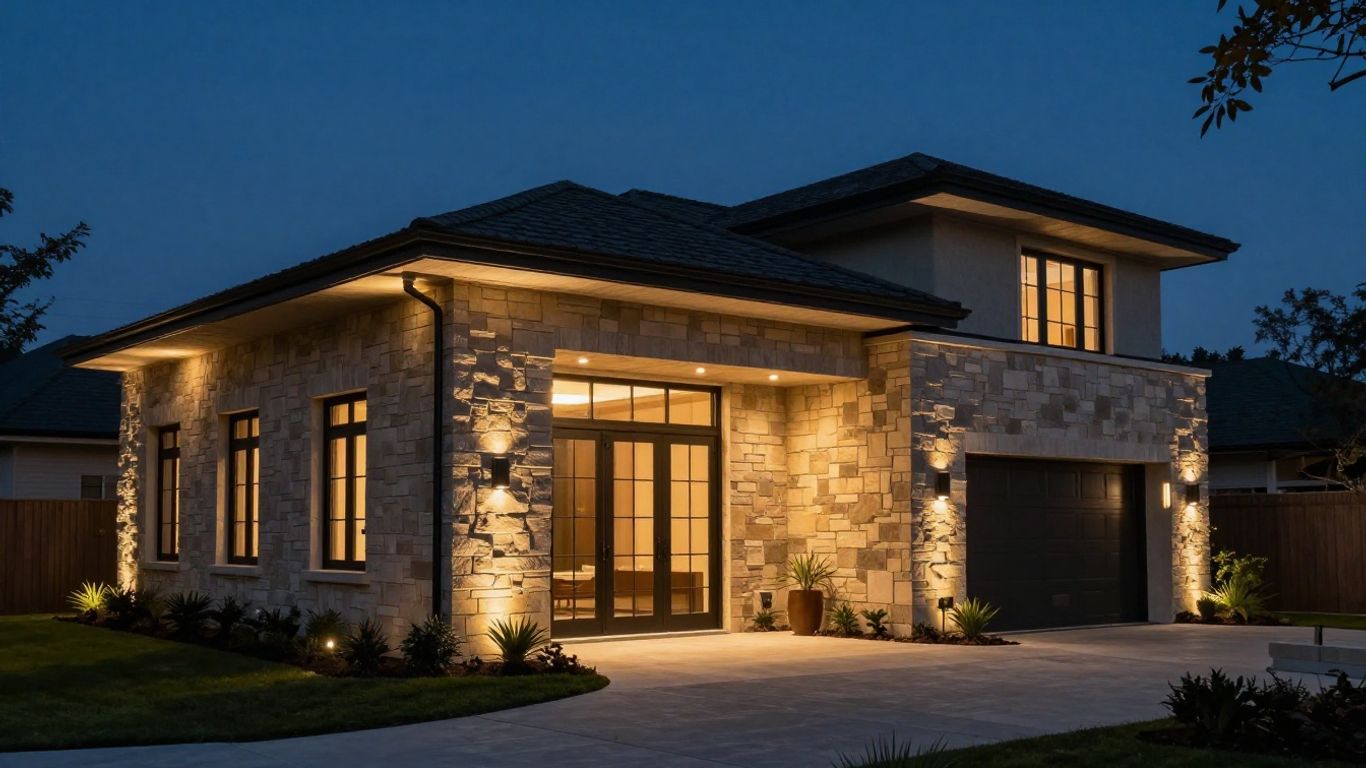
When the sun goes down, your home's architecture shouldn't just disappear. Architectural lighting is all about using light to really show off the shape and character of your house. It's not just about making things visible; it's about creating a whole new look for your place after dark, highlighting its best features and making it feel welcoming.
Revealing Structure And Proportions
Think of architectural lighting as a way to sculpt your home with light. It helps to bring out the lines, the angles, and the different levels of your building. By carefully placing lights, you can make certain parts stand out, like a prominent roofline or a distinctive window. This isn't about flooding the whole house with light, which can make it look flat. Instead, it's about using light and shadow to give your home depth and make its structure really pop.
- Uplighting: Placing lights at the base of the building to shine upwards, highlighting walls, columns, or decorative features.
- Downlighting: Mounting fixtures higher up, perhaps under eaves, to cast light downwards, defining roof edges or entryways.
- Washing: Using lights to create a broad, even spread of light across a large surface, like a brick or stone facade.
- Grazing: Positioning lights very close to a textured surface, like rough stone or wood, to exaggerate its texture and create dramatic shadows.
Illuminating Facades With Controlled Light
Getting the facade right is key. You want to show off the materials and the design without creating glare or harshness. This means choosing the right kind of light and making sure it's aimed precisely. For instance, using a warm-toned light on brickwork can make it look richer, while a cooler light might suit a modern render. It’s also about controlling where the light goes. You don’t want light spilling everywhere; you want it focused on the architectural elements you want to showcase. This careful control stops the light from becoming distracting and keeps the focus on the building itself.
The goal is to make the light feel like a natural extension of the architecture, not something that's just been stuck on afterwards. It should complement the materials and the design, making the house look its best at night.
Creating A Welcoming Nighttime Identity
Ultimately, architectural lighting is about giving your home a distinct personality after dark. It's the first impression visitors get when they arrive, and it can make a big difference to how your home feels. A well-lit entrance, for example, is not only practical but also incredibly inviting. By thoughtfully illuminating the front of your house, you create a sense of arrival and make your home feel more secure and cared for. It transforms your house from just a building into a warm and inviting home, even when it’s dark outside. Think about the materials used in your home's construction and choose light bulbs that complement them. For example, warm white LED bulbs (around 2700K) are often best for traditional materials like brick or stone, while cooler tones might suit modern designs. The type of bulb, like a smart bulb or a standard LED bulb, can also affect the overall mood and control you have over the lighting.
Bringing Exterior Lighting Design Together For Your Home
So, you've thought about the planning, you understand the different types of lights, and you've even considered how to make your home look good from the street. Now, it's about making it all work together. It’s not just about sticking a few lights up; it’s about creating a cohesive look that feels intentional, like it belongs to your house and garden.
Unifying Architecture, Landscape, And Function
Think of your home's exterior as a whole picture. The lighting needs to tie the building itself, the plants and trees, and how you actually use the space all together. You don't want the lights on the house shouting at the lights in the garden, or vice versa. The goal is to create a single, pleasing nighttime environment. This means considering how the light spills from one area to another, how the fixtures themselves look during the day, and whether the overall effect is welcoming and safe.
A Design-Led Approach To Cohesion
Getting this right often means stepping back and looking at the bigger design. Instead of picking lights one by one, try to think about the overall mood and style you're aiming for. Do you want something modern and sharp, or more traditional and soft? The materials of your house, the colours, and the shapes of your garden all play a part. A good design approach considers how each light fixture contributes to the overall narrative of your home after dark. It’s about making sure the lighting complements, rather than competes with, your property's existing character.
Elevating The Experience Of Your Exterior Spaces
Ultimately, well-integrated exterior lighting transforms how you experience your home. It makes pathways safer, highlights beautiful garden features, and creates inviting areas for spending time outdoors. It turns your property from just a house into a welcoming haven, even after the sun goes down. It’s about adding layers of comfort, security, and visual appeal that make your home feel more special and usable throughout the year. Imagine stepping out onto your patio on a summer evening, bathed in soft, well-placed light – that's the power of bringing it all together.
LED Performance And Energy Efficiency For Exterior Lighting Home
When you're thinking about lighting up the outside of your house, it's easy to get bogged down in all the different styles and where to put them. But one thing that really makes a difference, and often gets overlooked, is the actual light source. These days, LED bulbs are pretty much the standard, and for good reason. They're not just a bit better; they're a whole different ballgame compared to older types of bulbs.
The Benefits Of LED Technology
So, why all the fuss about LEDs? Well, for starters, they use a lot less electricity. We're talking significantly less power to produce the same amount of light. This means your electricity bill will thank you, and it's also a much kinder choice for the environment. Plus, they last ages. You can expect LED bulbs to keep going for thousands of hours, meaning you won't be up a ladder replacing them every few months. This longevity also means less waste, which is always a good thing.
- Reduced energy consumption: Saves money and is better for the planet.
- Extended lifespan: Fewer replacements mean less hassle and less waste.
- Durability: LEDs are generally more robust than traditional bulbs.
- Instant on: No more waiting for lights to warm up.
Sustainable Solar-Powered Options
If you're really keen on cutting down your energy use, solar-powered LED lights are a fantastic option. These clever little fixtures harness the sun's energy during the day and then use that power to light up your garden or driveway at night. They're brilliant for areas where running mains electricity might be tricky or expensive. You can find them in all sorts of styles, from simple path lights to more decorative wall lanterns. They're a great way to add light without adding to your energy bill at all.
Smart Controls For Seamless Operation
Pairing your LED lights with smart control systems takes things to the next level. Think about lights that turn on automatically when they detect movement, or ones that dim down after a certain hour to save energy. You can set schedules so your lights come on and off at specific times, mimicking occupancy when you're away or just making sure your path is lit when you get home. This not only adds convenience but also boosts security and makes sure you're not wasting electricity by having lights on when they're not needed. It’s about having your lighting work for you, intelligently.
Using LEDs with smart controls means you get a lighting system that's not only efficient and long-lasting but also incredibly adaptable. You can fine-tune everything from brightness to timing, making your exterior spaces look great and function perfectly, all while keeping an eye on your energy usage. It's a win-win situation for your home and your wallet.
Making your home's outside look great and save money on electricity bills is easier than you think. Our exterior lighting options are designed to be bright and use less power. Discover how smart lighting can transform your home's appearance while keeping your energy costs down. Visit our website today to explore the best choices for your home.
Bringing It All Together
So, there you have it. Making your home look good after dark is totally doable. It’s not just about sticking a few lights up; it’s about thinking about how you want your place to feel and look. By mixing up the types of lights, putting them in the right spots, and maybe even getting a bit clever with timers or sensors, you can really change how your home feels. It makes it safer, more welcoming, and honestly, just a lot nicer to come home to. Don't be afraid to experiment a bit – you might be surprised at what a difference a few well-chosen lights can make. Happy lighting!
Frequently Asked Questions
What's the best way to start planning my outdoor lights?
First, have a good look around your garden and house. Think about where people walk, where you relax, and any cool features like trees or walls you want to show off. Knowing these spots helps you decide where the lights need to go and what kind of light you'll need.
What are the main types of outdoor lights?
There are three main types: Ambient light is like a gentle background glow for general visibility. Task lighting is brighter and focused for specific jobs, like by your front door. Accent lighting is used to highlight features, like a special plant or a textured wall.
How can I make my house look more interesting at night with lights?
Mix different types of lights! Use a general ambient light, add task lights where needed, and then use accent lights to point out cool features. This creates layers of light and shadow, making your home look more dynamic and inviting, rather than just brightly lit everywhere.
Do outdoor lights help with security?
Yes, they absolutely can! Lights near doors and pathways can make it harder for unwelcome visitors to hide. Using motion sensors means lights will switch on when someone approaches, startling them and alerting you. Timers can also make it look like someone's home even when you're out.
What materials should I look for in outdoor lights?
Since lights are outside, they need to be tough! Look for fixtures made from weather-resistant materials like metal that won't rust easily, and finishes that can handle sun and rain. This ensures they'll last a long time and keep looking good.
Are LED lights good for outdoor lighting?
Definitely! LEDs are super energy-efficient, meaning they use less electricity and can save you money. They also last a really long time, so you won't have to change bulbs as often. Plus, they come in different colours and can be easily controlled with smart systems.

