

Transform Your Sleep Space: A Guide to Choosing the Perfect Bedroom Ceiling Lights
Picking out the right bedroom ceiling lights can feel like a big deal, right? It's not just about having something overhead; it's about setting the whole mood for your personal space. Whether you want a cozy vibe for winding down or bright light for getting ready in the morning, the lights you choose make a huge difference. There are tons of options out there, from fancy chandeliers to simple, modern fixtures, and it can get a little confusing. This guide is here to help you figure it all out, so your bedroom feels just right.
Key Takeaways
- The right bedroom ceiling lights are key to creating the perfect atmosphere in your personal sanctuary.
- Think about what you actually do in your bedroom to pick lights that are both stylish and useful.
- The size of your bedroom ceiling lights should match the size of your room to keep things looking balanced.
- Color temperature matters a lot – warm light is good for relaxing, while cooler light helps you feel more awake.
- Don't forget to layer your lighting by combining ceiling lights with other sources like wall sconces and dimmers for ultimate mood control.
Understanding The Role Of Bedroom Ceiling Lights
Functionality Meets Style
When you're thinking about the lights in your bedroom, it's easy to just focus on how they look. But honestly, they do a lot more than just sit there looking pretty. Your ceiling light is often the main source of light, and it needs to work for all the things you actually do in your room. Is it just a place to sleep, or do you also read in bed, get dressed, or maybe even do a bit of crafting? The right ceiling light needs to be practical enough for your daily routines while also adding to the overall feel of the space. It’s about finding that sweet spot where good looks and usefulness go hand-in-hand.
Utility Takes The Spotlight
Let's be real, the primary job of a bedroom ceiling light is to give you light. But how much light, and what kind, really matters. Think about your mornings. Do you need a bright, clear light to help you pick out clothes without fumbling around? Or is your bedroom more of a sanctuary where you want a soft, gentle glow to help you unwind? The type of fixture and the bulbs you use make a big difference here. For example, a fixture that spreads light evenly is great for general visibility, making sure there aren't any dark corners. On the flip side, a light that can be directed might be better if you have a specific spot, like a cosy reading chair, that needs more attention.
Here’s a quick look at how ceiling lights can help with different bedroom activities:
- Getting Ready: You'll want bright, even light. Fixtures that spread light widely are good for this.
- Reading: A more focused light is better. Think about a pendant light or a fixture with a shade that directs the beam.
- Relaxing: Softer, warmer light is usually best. Lights with dimmers are a real bonus here.
- General Ambiance: A fixture that provides a pleasant glow without harsh shadows works well.
Choosing the right ceiling light isn't just about picking something that fits your style; it's about making sure it actually helps you live better in your room. It's the foundation for all your other lighting choices.
Balancing Natural And Artificial Light
Your bedroom likely gets some natural light during the day, and that's lovely. But what happens when the sun goes down? That's where your artificial lighting, especially your ceiling light, comes in. It's about creating a smooth transition from day to night. If you have big windows, you might get plenty of sunshine, but you'll still need good artificial light for the evenings. Using warm-toned bulbs can make your room feel cosy and inviting after dark. You can control how much natural light comes in with curtains or blinds, which also helps with privacy. The goal is to have a space that feels comfortable and works for you, whether it's bright daylight or soft evening light.
Choosing The Right Bedroom Ceiling Lights For Your Space
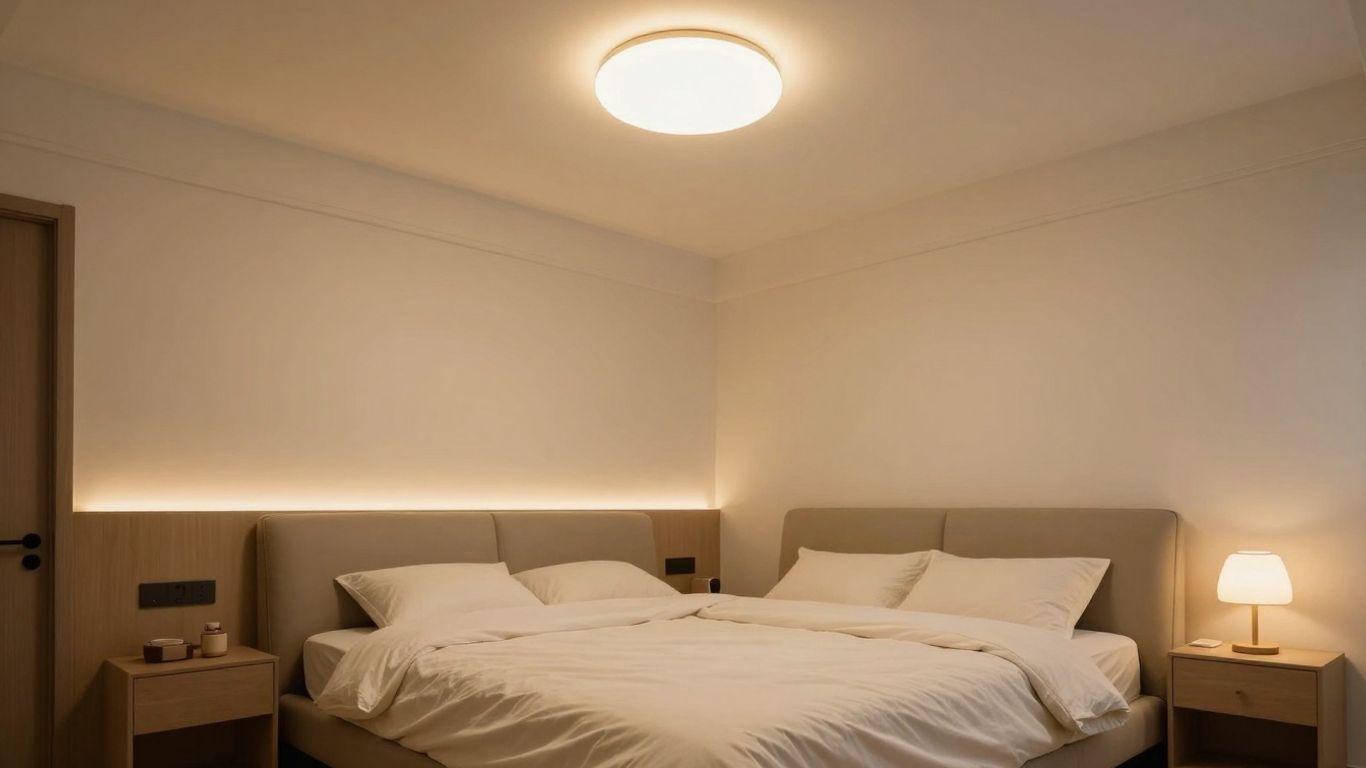
Picking out the right ceiling lights for your bedroom isn't just about brightness; it's about making the whole room feel right. You want something that looks good, works well, and fits with everything else. It can feel a bit overwhelming with all the choices out there, but let's break it down.
Room Size And Layout Considerations
First off, think about the size of your bedroom. A massive chandelier might look amazing in a huge master suite, but in a smaller room, it could just make things feel cramped. Conversely, a tiny light in a large room can look a bit lost.
- Small Bedrooms: Look for flush mount lights or semi-flush fixtures that sit close to the ceiling. These give off good light without taking up visual space. You might even consider a couple of smaller, strategically placed lights instead of one big one.
- Medium Bedrooms: This is where you have more flexibility. A medium-sized pendant light or a stylish flush mount can work well. Consider fixtures where you can adjust the height, so you can fine-tune the look and light.
- Large Bedrooms: Don't be afraid to go a bit bigger here. A statement pendant light, a stylish chandelier, or even multiple fixtures can help fill the space and add a focal point. Just make sure the scale feels right for the room.
Also, consider your ceiling height. If you have low ceilings, anything that hangs down too far will just get in the way. High ceilings, on the other hand, can handle more dramatic, larger fixtures.
The goal is to create a sense of balance. The light fixture should complement the room, not dominate it or disappear into it.
Purpose Of The Lighting: Ambiance, Task, Or Both
What do you actually do in your bedroom? Most people use their bedroom for a few different things, and your lights should be able to handle them all.
- Relaxation and Ambiance: This is probably the main one. You want a warm, soft glow for winding down in the evening. Think about lights that cast a gentle light, maybe with a dimmer switch so you can control the mood.
- Getting Ready: Do you need good light for choosing clothes or doing your hair and makeup? You might need brighter, more direct light for these tasks. This could come from the main ceiling light, or you might need to supplement it with other sources.
- Reading: If you like to read in bed, a central ceiling light might not be enough. You'll likely want bedside lamps or wall-mounted reading lights for focused illumination.
Ideally, your ceiling light should be versatile enough to provide general illumination that can be adjusted for different needs. A dimmer is your best friend here, allowing you to switch from bright and functional to soft and cosy.
Matching Your Bedroom Light Ceiling With Interior Decor
Your bedroom ceiling light is a big visual element, so it needs to fit with your room's style. Think about the overall look you're going for.
- Modern/Minimalist: Clean lines, simple shapes, and materials like brushed metal or matte finishes often work best. Think sleek flush mounts or geometric pendant lights.
- Traditional/Classic: You might lean towards more ornate designs, perhaps a crystal chandelier or a fixture with fabric shades. Warm metals like brass or bronze can add to this feel.
- Bohemian/Eclectic: This is where you can have more fun! Consider unique materials, interesting textures, or even a vintage-inspired piece. A rattan pendant or a fixture with a bit of personality could be perfect.
- Industrial: Exposed bulbs, metal cages, and darker finishes are common here. A simple pendant with an Edison bulb might fit the bill.
Don't forget about the colour of the fixture itself. Black, white, gold, chrome – each can give a different vibe. The key is to choose a light that feels like a natural extension of your room's existing style. It should add to the overall aesthetic, not clash with it. If you're unsure, a neutral colour and a simple design are usually safe bets that can be updated later if your style changes.
Exploring Different Types Of Bedroom Ceiling Lights
When it comes to lighting up your bedroom, the ceiling fixture is often the main event. It's not just about throwing light around; it's about choosing something that fits the room's style and your personal needs. There's a whole world of options out there, from lights that hug the ceiling to those that hang down like a piece of art. Let's take a look at some of the most common types you'll find.
Flush Mounts and Ceiling-Mounted Options
These are your go-to if you've got lower ceilings or just prefer a cleaner look. Flush mount lights sit directly against the ceiling, meaning they don't hang down at all. They're great for making a room feel a bit more spacious. Semi-flush mounts, on the other hand, have a small gap between the fixture and the ceiling, allowing light to spill upwards and outwards, which can create a softer glow. They're a good middle ground, offering a bit more visual interest than a pure flush mount without taking up much headroom.
- Ideal for: Bedrooms with ceilings under 8 feet.
- Style: Can range from simple and modern to more decorative.
- Light distribution: Generally provides diffused, even lighting.
Pendant Lights and Chandeliers
If you're looking to make a statement, pendant lights and chandeliers are definitely worth considering. Chandeliers, traditionally seen as grand fixtures, can add a touch of elegance and drama to a bedroom, especially in larger rooms. They come in all sorts of styles, from ornate crystal designs to more minimalist, modern interpretations. Pendant lights are similar but usually hang from a single cord or chain and are often a bit smaller, making them versatile for various room sizes. They can be great for creating a specific mood or highlighting a particular area, like a reading nook. You can find some really interesting farmhouse wood chandeliers that bring a unique charm.
Choosing between a pendant and a chandelier often comes down to the scale of your room and the overall aesthetic you're aiming for. A grand chandelier might overwhelm a small space, while a delicate pendant could get lost in a vast room.
Recessed Lighting For A Sleek Finish
Recessed lighting, often called 'can lights', are fixtures that are installed into the ceiling itself, so only the trim and the bulb are visible. This gives a very clean, minimalist look, which is fantastic for modern bedrooms or if you want the focus to be on other decor elements. They're also really practical because they don't take up any visual space. You can use them as the main light source, or combine them with other types of lighting for a layered effect. Many modern recessed lights are LED, which means they're energy-efficient and long-lasting. You can even get smart versions that allow you to control brightness and colour temperature from your phone.
- Aesthetic: Minimalist and unobtrusive.
- Installation: Requires cutting into the ceiling.
- Versatility: Can be used for general illumination or task lighting.
The Impact Of Light Colour Temperature
The Golden Glow For Relaxation
When you're trying to switch off after a long day, the kind of light you have really matters. Think about the light from a sunset – it's soft, warm, and just makes you feel calm. That's the kind of light you want in your bedroom for winding down. Lights with a colour temperature between 2,700K and 3,000K give off this lovely golden hue. It’s like wrapping your room in a warm hug, signalling to your brain that it’s time to relax and get ready for sleep. It’s not about being super bright; it’s about creating a cosy atmosphere that feels safe and peaceful. Using LED bulbs in this range is a good way to get that effect without using much electricity.
Crisp Brilliance For Alertness
Your bedroom isn't just for sleeping, though, is it? Mornings can be a bit of a rush, and sometimes you need to get focused. For those times, a cooler light temperature, maybe around 4,000K to 5,000K, works wonders. This light is brighter and sharper, a bit like natural daylight on a clear day. It can help you feel more awake and alert, which is perfect for getting dressed, doing your makeup, or if you need to read something important. It’s the kind of light that helps you get things done.
Neutral Tones For Versatility
Sometimes, you don't want super warm or super cool. A neutral light, usually between 3,500K and 4,000K, offers a good middle ground. It’s not too yellow and not too blue, just a clean, balanced light. This can be great for general use in the bedroom, like when you're tidying up or just want a clear view of things without the light feeling harsh or overly relaxing. It’s a versatile choice that works well for many different tasks.
The colour temperature of your light bulbs, measured in Kelvin (K), plays a big part in how your bedroom feels. Lower Kelvin numbers mean warmer, more yellow light, while higher numbers mean cooler, bluer light. Getting this right can make a huge difference to your mood and how well you sleep.
Here’s a quick look at what different temperatures do:
- Warm White (2,700K - 3,000K): Best for relaxation, creating a cosy, inviting feel. Think evenings and bedtime.
- Neutral White (3,500K - 4,000K): A balanced choice, good for general use and tasks that need clear visibility.
- Cool White (4,000K - 5,000K): Ideal for alertness and focus, mimicking daylight. Great for mornings or task lighting.
Enhancing Your Bedroom Lighting Scheme
So, you've picked out a cracking ceiling light, but is that really the end of the story? Not quite. Think of your bedroom lighting like building a great outfit. You wouldn't just throw on one piece and call it done, right? The same goes for your bedroom. A single ceiling light, even a really nice one, often isn't enough to make the room feel truly finished and functional. Layering different types of lights is how you get that cosy, practical, and stylish vibe.
Layering Light With Wall Sconces
Your main ceiling light is great for general brightness, but wall sconces are like the perfect accessories. They add a softer, more focused glow that can really make a space feel warmer and more inviting. Placing them strategically, maybe on either side of your bed or flanking a piece of art, can create lovely pools of light. This not only looks good but also means you don't have to rely solely on the overhead light when you just want a bit of mood lighting. They're brilliant for adding a touch of sophistication without overwhelming the space.
The Power Of Dimmers
This is a game-changer, honestly. Installing dimmers on your ceiling lights, and even your sconces, gives you total control over the atmosphere. You can go from bright and functional for getting ready in the morning to a soft, dim glow for winding down at night. It’s super simple to add to most existing setups and makes a huge difference in how the room feels throughout the day and night. You can really tailor the light to whatever you're doing.
| Lighting Scenario | Recommended Dimmer Setting | Mood Created |
|---|---|---|
| Morning Routine | 75-100% | Bright and energising |
| Reading in Bed | 50-75% | Focused but comfortable |
| Evening Relaxation | 25-50% | Soft and cosy |
| Sleep Preparation | 10-25% | Very dim and calming |
Accent Lighting For Personal Touches
Accent lighting is the final touch, the detail that makes everything pop. This is where you draw attention to specific things you love in your room – maybe a favourite painting, a cool architectural feature, or even a lush plant. Think of small spotlights or directional lamps. They don't light up the whole room; they just highlight what's important, adding depth and personality. It’s how you make your bedroom feel uniquely yours. Consider LED strips under your bed or around a headboard for a subtle glow that adds a modern flair.
Don't underestimate the impact of small details. Thoughtfully placed accent lights can transform a standard bedroom into a personalised sanctuary, reflecting your individual style and making the space feel more intimate and considered.
Making The Final Selection For Your Bedroom Ceiling Lights
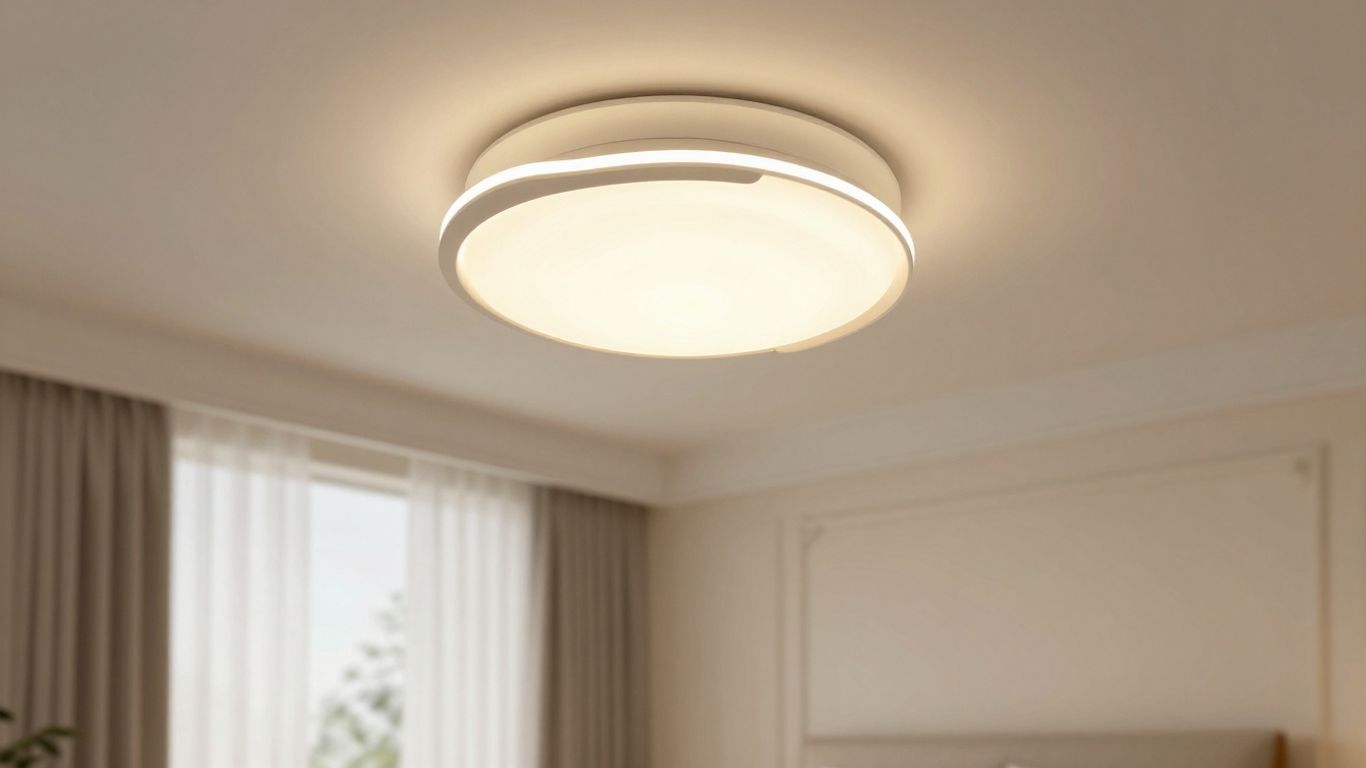
So, you've thought about the style, the size, and the type of light you want. Now comes the part where you actually pick the one. It can feel a bit daunting, can't it? There are so many options out there, from sleek LED bulbs to fancy chandeliers. The trick is to bring together all the things you've learned and make a choice that feels right for your space and your life.
Testing Brightness And Colour Temperature
Before you commit, if you can, go and see the light in person. Take a photo of your bedroom with you. See how bright it is – is it going to be too much, or not enough? And that colour temperature we talked about? See if you can get a feel for it. A warm, yellowish light (around 2700K) is usually best for bedrooms because it's relaxing. A cooler, bluer light (5000K+) might feel more like an office. It's hard to tell from a tiny picture online, so a quick trip to a lighting shop can save a lot of hassle later.
Reading Reviews And Seeking Expert Advice
Don't underestimate the power of other people's experiences. Have a good look at online reviews. See what people are saying about how easy it was to fit, if it's held up well over time, and if the light is actually as described. If you're really stuck, or if you're looking at something a bit more unusual, don't be afraid to ask for help. The staff in lighting stores often know their stuff, and for trickier projects, a quick chat with an electrician or a designer could point you in the right direction.
Ensuring Compatibility With Existing Systems
This is a bit of a practical one, but super important. Make sure the light you choose will actually work with your home's wiring. If you're planning on using a dimmer switch, check that the light and the bulbs are compatible with it. Most modern LED bulbs and fixtures will say on the packaging if they're dimmable. It's also worth checking if you need any special fittings or adapters, especially if you're going for something a bit different. You don't want to get your new light home only to find out it won't connect to your existing setup. It’s a bit like buying a new gadget and then realising you don’t have the right charger – frustrating!
Choosing the right lights for your bedroom ceiling can really change the feel of the room. Think about what kind of mood you want to create – bright and energising for getting ready, or soft and cosy for relaxing. We've got a great selection to help you find the perfect fit. Why not explore our range of bedroom ceiling lights today and see what sparks your imagination?
Making Your Bedroom Shine
So, we've gone through all the bits and bobs about picking out ceiling lights for your bedroom. It's more than just sticking something up there to stop you bumping into things in the dark, you know? It's about making the whole room feel right, whether that's super cozy for chilling out or bright enough to actually find your socks in the morning. Remember to think about the size of your room, what you actually do in there, and what kind of mood you're going for. Don't be afraid to mix and match different lights, use dimmers, and maybe even add a wall light or two. Your bedroom is your personal space, so make sure the lighting reflects that. Go on, give it a go and make your sanctuary a bit brighter!
Frequently Asked Questions
How do I know what size ceiling light to get for my bedroom?
It's pretty simple! Measure the length and width of your room in feet, add those two numbers together, and then change that total to inches. For example, if your room is 10 feet by 12 feet, you'd add 10 + 12 = 22. So, a light fixture around 22 inches wide would probably be a good fit. Smaller rooms might look best with lights between 12-18 inches, while bigger rooms can handle lights around 24-30 inches.
What's the difference between warm and cool light for a bedroom?
Think of warm light like a cosy sunset – it's yellowish and makes you feel relaxed and sleepy. This is usually between 2700K and 3000K. Cool light is more like bright daylight, which helps you feel awake and focused, great for getting ready in the morning. This is typically between 4000K and 5000K. For winding down, warm light is best, but cool light can be useful for tasks.
Can I use more than just a ceiling light in my bedroom?
Absolutely! Using different types of lights, called layering, can make your room feel much nicer. You can use your main ceiling light for overall brightness, then add wall lights (sconces) to highlight artwork or create a softer glow. Bedside lamps are also great for reading. It's all about creating different moods and making sure you have light where you need it.
What are dimmers, and why would I want them in my bedroom?
Dimmers are like a volume control for your lights. They let you make the light brighter when you need to see clearly, like when you're cleaning or getting dressed, or dim it down to create a soft, relaxing atmosphere for watching TV or getting ready for bed. They're really easy to use and can make a big difference to how your room feels.
What is 'accent lighting' and how can I use it?
Accent lighting is like adding special touches to your room. It's used to draw attention to specific things you like, such as a favourite painting, a cool plant, or even the edge of your bed. You could use small spotlights or LED strips for this. It's a great way to make your bedroom feel more personal and stylish, adding little bits of light that make your favourite things stand out.
How important is it for my ceiling light to match my bedroom's style?
It's quite important! Your bedroom is your personal space, so you want the light to fit in with your furniture and colours. If you have a modern room, a sleek light might look best. If your room is more traditional, a fancier light might be better. Choosing a light that matches your style helps make the whole room feel put together and more enjoyable.

